
Shipping from Turkey to Sudan: Port Sudan container and air freight options, freight cost factors, transit time and the ACD mandatory since 2026.
Last Updated: 23 November 2026 — port, airport and customs conditions in Sudan change frequently; we reconfirm the current situation before every shipment.
Can You Ship from Turkey to Sudan? The Short Answer
Yes. Shipping from Turkey to Sudan today runs mainly as container freight (FCL/LCL) into Port Sudan and as air freight into Port Sudan airport. Containers loaded at Mersin, Iskenderun, Ambarli or Izmir usually reach the Red Sea on transshipment services. Freight cost depends on container type, cargo weight and volume, commodity, Incoterm, transshipment hub, war-risk insurance and inland haulage. Transit time is not a single number; it depends on the carrier's transshipment plan and congestion at Port Sudan. This guide covers everything you need before shipping, including the Advance Cargo Declaration (ACD) that became mandatory in 2026, and how to get a current freight quote.
What Shipping Options Exist from Turkey to Sudan?
FCL Container Shipping (20ft and 40ft)
For bulky cargo such as machinery, steel, building materials, food and household goods, a full container is the most economical option. Port Sudan's South Container Terminal resumed transshipment operations in June 2026 and received large-capacity container ships for the first time that same month. According to figures released by the state-run Sea Ports Corporation, the port handled around 26,000 TEU in June 2026.
LCL Groupage
For a few pallets or a few cubic metres, LCL consolidation can be considered. Regular LCL services to Sudan are limited, so cargo-ready dates and consolidation cut-offs should be planned in advance.
Air Freight
Air freight is used for urgent spare parts, samples, electronics and high-value small shipments. Port Sudan New International Airport (PZU) is the country's main air cargo gateway, and Turkish Airlines' Istanbul–Port Sudan service offers belly-hold capacity. Khartoum airport reopened to international flights in April 2026, but operations were disrupted after an attack in May 2026, so we confirm Khartoum-bound cargo separately for each shipment. See our air freight service for an overview.
Door-to-Door and Project Cargo
Door delivery is more predictable within Port Sudan city, while deliveries to Khartoum and inland regions depend on long road connections, security conditions and the consignee's customs capacity. Out-of-gauge cargo such as generators, construction machinery or power equipment is planned on flat racks, open tops or as breakbulk.
To see which option fits your cargo, just enter a few details in our Turkey–Sudan freight quote form.
How Is the Freight Cost from Turkey to Sudan Calculated?
There is no fixed "list price" on the Sudan lane; carriers update rates frequently. The main cost drivers are:
Container type and equipment: 20ft DC, 40ft DC/HC, flat rack or open top.
Weight and volume: per-container rate and weight limits for FCL; per m³/ton for LCL; for air freight, the higher of actual and volumetric weight (chargeable weight).
Port of loading and transshipment: Mersin, Iskenderun, Ambarli or Izmir departure and dwell time at the hub.
Surcharges: bunker (BAF), Red Sea and war-risk surcharges, terminal handling (THC), B/L fees and the ACD application cost.
Incoterm: EXW, FOB, CFR/CIF or DAP decides which part of the cost is yours.
Insurance: marine cargo insurance with war-risk cover is particularly important for Sudan.
Destination side: terminal and customs charges at Port Sudan and inland haulage to Khartoum or other cities.
How Long Does Shipping from Turkey to Sudan Take?
By sea, transit time depends on whether the service is direct or transships via a Red Sea or Eastern Mediterranean hub, dwell time at that hub and berth congestion at Port Sudan. Port management itself has said berth length and depth remain below what growing traffic needs, which can cause waiting in busy periods. Airport-to-airport air freight is short, but flight capacity and customs formalities can extend the total time. For door-to-door planning, road haulage from Port Sudan inland must be added separately.
For a current sailing schedule and delivery estimate for your own cargo, get a current Sudan freight and transit estimate.
Sudan's Main Trade Gateways
Port Sudan (SDPZU): the country's main seaport and container gateway. Tracking data shows cargo from carriers such as Maersk, CMA CGM, PIL, MSC, CU Lines and Akkon Lines; the service mix changes over time.
Port Sudan New International Airport (PZU): the main air cargo gateway; its proximity to the seaport makes sea-air combinations possible.
Khartoum: the main consumption and trade centre; airport and road access should be confirmed before shipping.
What Goods Are Shipped from Turkey to Sudan?
According to the Turkish Exporters Assembly (TIM), Turkey's exports to Sudan were around USD 276.7 million in 2024, and Turkey's Ministry of Agriculture put bilateral trade at around USD 390 million as of 2025. From a logistics perspective, key cargo groups include food products (such as flour, pasta and vegetable oils), building materials and steel, machinery and spare parts, generators and power equipment, furniture, home textiles and household appliances.
Shipping Machinery and Generators from Turkey to Sudan
Reconstruction demand is making machinery, generator and construction-equipment shipments more important. Dimensions, weight, lifting points and lashing plans must be clear before booking; for out-of-gauge cargo we arrange special equipment through our sea freight service.
Exporting Food Products to Sudan
For food cargo, shelf life, labelling and health/origin certificates should be checked with the buyer in advance. Standards and conformity requirements in Sudan can vary by product group, so we recommend getting local confirmation from the importer.
Required Documents for Sudan and the ACD
ACD (Advance Cargo Declaration): since 1 January 2026, an ACD is mandatory for cargo bound for Sudan. According to notices from Maersk and other carriers, the ACD number must be obtained at the port of loading and shown clearly on the Bill of Lading. Cargo without an ACD may not be loaded at all, and missing or incorrect declarations can lead to administrative fines, delays or cargo rejection. Applications typically require a draft B/L, commercial invoice, freight invoice and packing list.
Commercial invoice and packing list
Bill of Lading (B/L) or Air Waybill (AWB) — showing the ACD number
Certificate of origin (as requested by the buyer)
Export declaration (Turkish customs)
Product-specific documents: health certificate, analysis report, conformity certificate, etc.
Payment channels and sanctions screening of all parties should also be checked before shipping to Sudan. To understand how transport documents work, see our article on MBL vs HBL.
What Does Dexpell Handle on Your Sudan Shipment?
Dexpell handles pickup from your factory or warehouse in Turkey, export customs coordination, FCL/LCL and air freight booking, preparation of the document set for the ACD application, cargo insurance including war risk, and arrival coordination with our agent at Port Sudan. As an IATA cargo agent, we plan air freight capacity directly with airlines. Because of conditions in the destination country, we confirm the current route and service scope in writing for every shipment.
Get a Turkey–Sudan Freight Quote
Calculate your Sudan freight cost now: enter your pickup city, destination city (Port Sudan, Khartoum, etc.), commodity, gross weight, dimensions, container type and Incoterm: https://www.dexpell.com/en/quote
You can also send your freight request to info@dexpell.com.
Frequently Asked Questions
How much does it cost to ship a container from Turkey to Sudan?
The price depends on container type, port of loading, transshipment plan, war-risk surcharges and destination charges. Rates on the Sudan lane are updated frequently, so the most accurate figure is a current quote based on your cargo details.
How long does sea freight from Turkey to Port Sudan take?
It depends on whether the service transships and how long cargo waits at the hub. Berth congestion at Port Sudan can add waiting time, so we share the current sailing schedule at booking.
Is an ACD mandatory for shipments to Sudan?
Yes, since 1 January 2026 an ACD is mandatory for cargo bound for Sudan. The ACD number is obtained at the port of loading and printed on the Bill of Lading; cargo without one may be refused for loading.
Can I send air freight from Turkey to Sudan?
Yes. The main air cargo gateway is Port Sudan airport, with belly capacity on the Istanbul–Port Sudan route. For Khartoum-bound air cargo, the airport's current status must be checked for each shipment.
Which Turkish ports are used for Sudan shipments?
Sudan cargo is typically loaded at Mersin, Iskenderun, Ambarli and Izmir (Aliaga). The best port depends on where the cargo originates and the carrier's service plan.
Can Dexpell deliver door-to-door to Khartoum?
Inland haulage beyond Port Sudan is assessed shipment by shipment depending on security and road conditions. Where possible, delivery is arranged through our destination agent; otherwise the delivery point is agreed as the port or a Port Sudan warehouse.
Can machinery and generators be shipped to Sudan?
Yes. Depending on dimensions, machinery and generators can move in standard containers, on flat racks or in open tops. Dimensions, weight and lifting details are needed before booking.
Is cargo insurance necessary for Sudan?
It is not mandatory but strongly recommended. Given regional risks, marine cargo insurance with war-risk cover is the safest way to protect your cargo's value.
Related Services and Articles
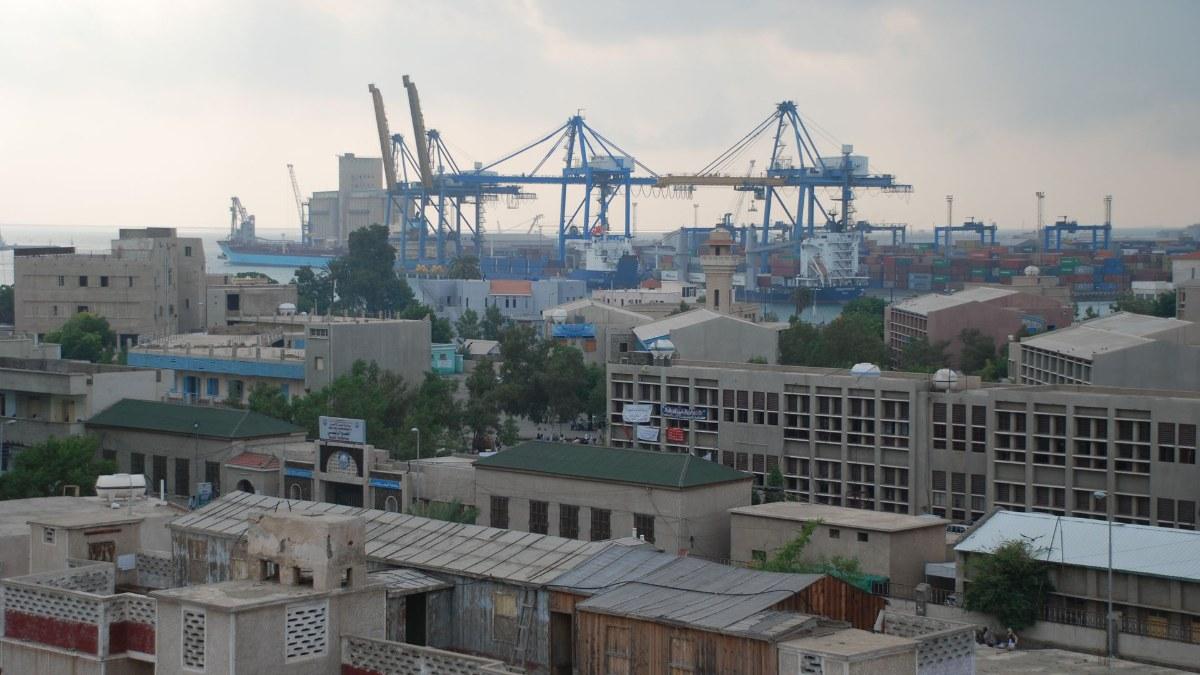
Photo: Port Sudan harbour, Bertramz, Wikimedia Commons, CC BY 3.0.

By
Dexpell LogisticsInternational Logistics & Trade
Dexpell Logistics is an international freight forwarding company offering sea, air and road transport, project logistics and trade consulting across 90+ countries. The news, guides and analyses on this blog are produced by the Dexpell expert team.
Dexpell is here for your logistics needs
Sea, air, and road freight, project logistics, and trade consulting across 90+ countries.
