
A guide for exporters shipping cargo from Europe to Syria via Turkey — road, sea and air options, current border and port status, customs process and how to request a freight quote.
How Is Shipping from Europe to Syria Carried Out?
As direct scheduled shipping services from Europe to Syria are limited, cargo is largely routed multimodally through Türkiye. Using combinations of road, sea, and air transport, cargo originating in Europe is first transported to Türkiye and then enters Syria by road through the Cilvegözü (Bab al-Hawa) and Öncüpınar (Bab al-Salameh) border crossings or by sea through the ports of Latakia and Tartus. Last Updated: August 24, 2026 — as the status of border crossings, ports, and sanctions can change rapidly, we recommend confirming the latest situation with Dexpell close to your loading date.
Europe–Syria Connections via Türkiye
For cargo arriving from Europe, Türkiye serves as a practical transit and consolidation hub thanks to its geographical location and developed road, sea, and air transport infrastructure.
Road Transport Connections
Capacity expansion work at the Cilvegözü (Bab al-Hawa) border crossing in Hatay is continuing in 2026; the site area is being increased from 17 to 23 decares, and the number of lanes is being raised from two to four. Transit trade to Iraq, Kuwait, Lebanon, Saudi Arabia, and Jordan is also possible through this crossing. Construction of the service building is also continuing at the Öncüpınar (Bab al-Salameh) border crossing in Kilis. Cargo arriving from Europe by truck can be transported by road through these crossings to northern Syria.
Sea Freight Connections
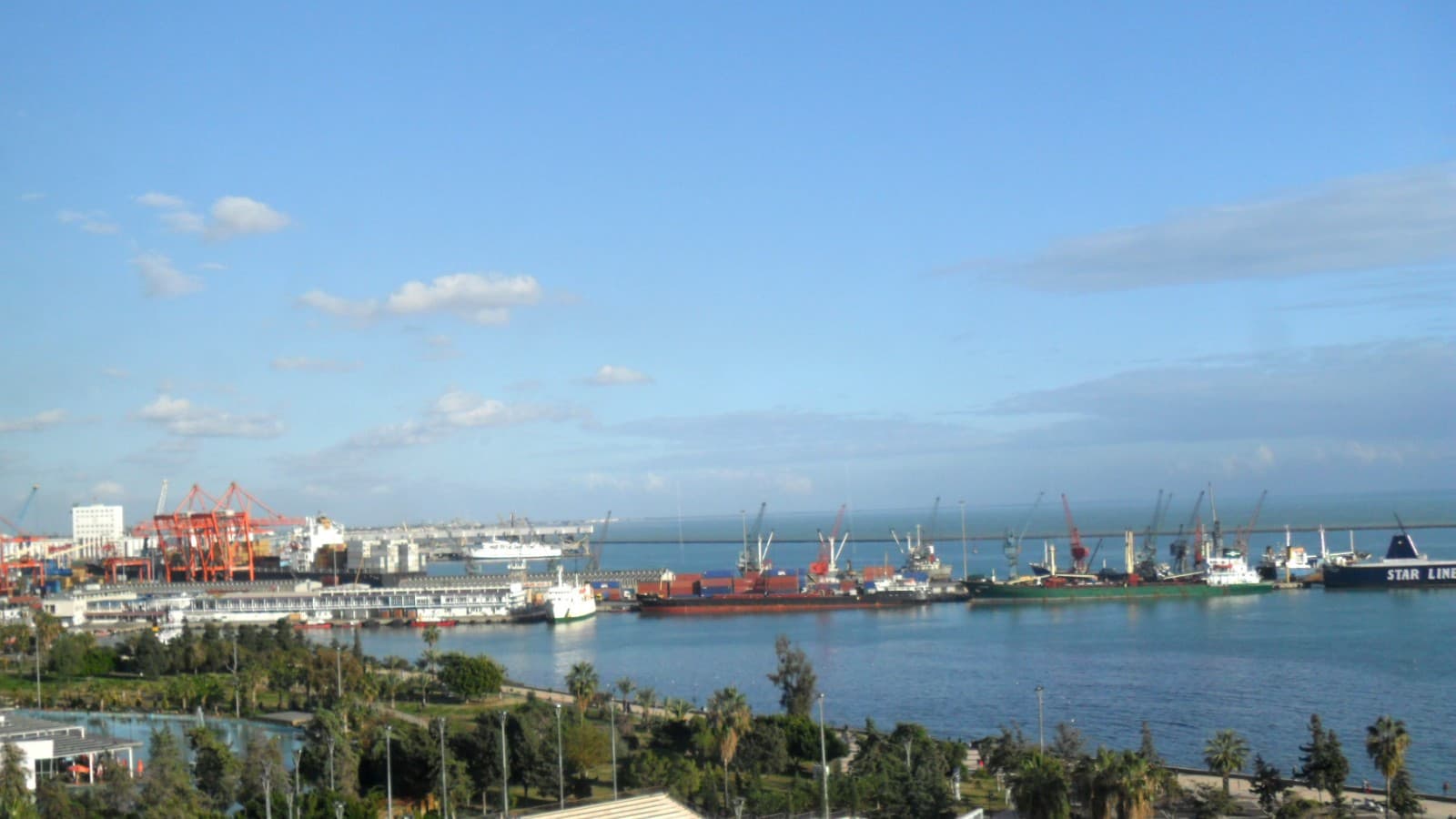
The ports of Latakia and Tartus received approximately 945 vessels in total and handled nearly 8 million tons of cargo in the first half of 2026. The Port of Tartus is being renovated under a 30-year, $800 million operating agreement with UAE-based DP World; its monthly handling capacity has been increased from 100,000 tons to 1 million tons. Meanwhile, the Port of Latakia is being modernized under a 30-year operating agreement signed with France's CMA CGM. Containers arriving from European ports at Türkiye's Mediterranean ports (such as Mersin) can be forwarded from there to Latakia or Tartus via transshipment.
Air Freight Connections
Cargo operations at Damascus International Airport are gradually returning to normal; however, regular, high-frequency cargo flights have not yet reached the level familiar to the European air cargo market. For urgent or sensitive cargo, connecting air freight via Istanbul and, when necessary, charter options can be considered.
Less-than-Truckload and Full-Load Shipping from Europe to Syria
When planning shipping from Europe to Syria, the quantity of cargo, the space it occupies, and delivery requirements directly affect the transport model to be used. For shipments routed through Türkiye, less-than-truckload shipping, full truckload transport, and container shipping meet different operational needs.
1. Partial Load Shipping (LTL and LCL)
Partial load transport can be considered for shipments that do not fill an entire vehicle or container. Suitable cargo collected from different shippers in Europe can be consolidated at designated transfer points and routed to Syria via Türkiye.
Partial load shipping can make more efficient use of transport capacity, particularly for small- and medium-volume commercial shipments. However, cargo consolidation times, handling requirements, and available route capacity should be evaluated in advance.
2. Full Truckload Transport (FTL)
Full truckload transport stands out when cargo volume is high or when shipment in a single vehicle is preferred.
When organizing truck transport from Europe to Syria, loading and unloading points, vehicle type, cargo weight, and border crossing conditions are evaluated together. More information about partial and full-load options is available through Dexpell's road freight services.
3. FCL and LCL Options in Container Shipping
FCL (Full Container Load) and LCL (Less than Container Load) models can be considered for sea-connected shipments. FCL means that the cargo uses an entire container, while LCL means that container space is shared with other shipments.
When determining the appropriate model for container shipping from Europe to Syria, cargo volume, weight, port of departure, and transshipment requirements should be taken into account. For heavy or high-volume shipments, sea freight services can be explored.
How Is the Shipping Process from Europe to Syria Planned?
A successful shipment in Europe–Syria logistics operations depends on more than simply choosing the appropriate means of transport. All stages, from the cargo's point of origin to the delivery address in Syria, must be planned in a coordinated manner.
Organizing Shipments from Europe to Syria in 6 Steps
Determining cargo details: Clarify the type of goods, HS code, number of packages or pallets, total weight, volume, and any special transport conditions.
Evaluating origin and destination addresses: Identify the loading address in Europe and the final delivery point in Syria.
Selecting the transport model: Evaluate full truckload, partial load, container, or multimodal shipping alternatives based on the cargo's characteristics.
Preparing the route and transfer plan: Examine appropriate transit points, transfer requirements, and border crossing procedures for the shipment routed through Türkiye.
Completing documentation and regulatory checks: Review documents relating to export, transit, and import stages, as well as any restrictions applicable to the goods and recipient.
Coordinating shipment and delivery: Monitor loading, international transport, transit procedures, and delivery activities at the destination within the planned operation.
Identifying the right transfer points is particularly important in operations involving more than one mode of transport. Dexpell's transit shipping solutions provide additional information on coordinating different transport modes and organizing cross-border shipments.
Key Considerations for Shipping to Syria via Türkiye
In international freight transport to Syria via Türkiye, operational details such as transfers, cargo security, and customs status are important for ensuring the smooth progress of a shipment.
Cargo Security During Transfer and Consolidation
In multimodal shipments combining road and sea transport, cargo may be transferred between different vehicles or modes of transport. During these operations, packaging, securing, and loading arrangements must be suited to the characteristics of the goods.
The following points should be considered in particular when planning transfers:
Palletizing: Arranging goods in a stable manner during transport and handling.
Packaging durability: Protecting cargo appropriately for long-distance transport and possible transfers.
Cargo securing: Reducing the risk of movement inside the vehicle or container.
Labeling: Ensuring that the recipient, delivery point, package number, and necessary handling warnings are legible.
Damage inspection: Checking the integrity of packaging at loading and transfer points.
Transit Customs Regime and Import Procedures
Routing cargo from Europe to Syria through Türkiye does not necessarily mean that it will be released for free circulation in Türkiye. Under suitable conditions, cargo can be transported under the customs transit regime.
However, the applicable customs procedure depends on the status of the goods, the shipment route, and the legislation of the countries concerned. Import procedures in Syria must also be evaluated separately.
For more detailed information, see our guide to customs clearance services in Syria and DDP shipping procedures.
Transport Planning for Sensitive and Oversized Cargo
Unlike standard palletized cargo, fragile, temperature-controlled, or oversized goods may require additional operational evaluation.
For these shipments, the vehicle's loading capacity, the physical characteristics of the goods, necessary equipment, and route suitability should be reviewed before loading. In particular, for shipments requiring special equipment, transport availability and the necessary permits should be verified in advance.
Costs to Check in a Freight Quote
When assessing a freight quote for shipping from Europe to Syria, focusing only on the main transport charge is not sufficient. The quote should clearly specify which operations are included and which expenses are calculated separately.
The main cost items to check in a freight quote are:
Base freight charge: The basic transport fee for the selected route and mode of transport.
Loading and unloading costs: Operational expenses that may arise at the point of origin or destination.
Transfer and handling costs: Operations that may be required at logistics centers in Türkiye or at border crossings.
Customs and documentation costs: Processing fees that may arise during export, transit, and import procedures.
Storage and waiting costs: Additional costs that may arise if planned time limits are exceeded.
Cargo insurance: Insurance costs determined by the requested coverage and the nature of the cargo.
When evaluating Europe–Syria shipping prices, the quote's validity period, currency, and excluded services should also be checked.
Pricing for Partial and Full-Load Shipments
Partial load shipping and full truckload transport from Europe to Syria have different pricing structures. For partial shipments, the space occupied by the cargo, its weight, volume, and consolidation requirements are important, whereas for full truckload transport, vehicle capacity, route, and operational conditions come to the fore.
Partial load transport may be worth considering in terms of cost for a small-volume shipment. However, full truckload transport may be more practical for large-volume shipments, cargo requiring special handling, or goods that are unsuitable for transport alongside other cargo.
For this reason, when planning road freight transport, the total shipment cost and delivery requirements should be considered together, rather than focusing solely on the transport rate per unit.
Advantages of the Türkiye Transit Route
Using Türkiye as a transit point gives European exporters the flexibility to combine road, sea, and air freight within a single coordinated operation. The trade volume between Türkiye and Syria also demonstrates the functioning of this infrastructure: Türkiye's exports to Syria reached $1.28 billion in the first half of 2026, up 26.4% year on year, while export volume rose 36.6% to 3.18 million tons. The Türkiye–Syria Joint Economic and Trade Committee (JETCO), established in August 2025, and the ongoing discussions on a Comprehensive Economic Partnership Agreement (CEPA) indicate that this trade corridor may strengthen further in the coming period.
Factors Determining Freight Costs
Freight costs for transport from Europe to Syria vary depending on cargo type, weight and volume (chargeable weight), mode of transport (road, sea, or air), Incoterm (EXW, FCA, DDP, etc.), border and customs processing times, additional insurance premiums, and transfer/handling costs in Türkiye. Due to the current sanctions environment, insurance and shipping costs may fluctuate periodically; therefore, rather than providing a fixed price, we recommend sharing your cargo details to obtain a current freight quote.
Operational Stages Affecting Transit Time
Shipping time from Europe to Syria does not consist solely of the driving or sailing time between two points. Particularly in shipments involving transfers, preparation time before departure and border crossing procedures can affect the total delivery time.
When planning transit time, collection of the cargo from its point of origin, completion of export documents, possible transfers in Türkiye, border crossing procedures, and import formalities in the destination country should each be considered separately.
For example, a delay in the loading date in Europe or a missed transport connection can change the subsequent transfer plan. For this reason, for time-critical deliveries, it is advisable to build a reasonable buffer into the operational schedule and confirm current transport connections in advance.
Consistency of Information in Shipping Documents
In international freight transport from Europe to Syria, it is important not only that documents are complete but also that they are consistent with one another.
The shipper, consignee, product description, quantity, weight, and delivery details must match across the commercial invoice, packing list, and transport documents. Particularly in shipments involving multiple transport modes, establishing the document workflow and responsibilities in advance can reduce operational disruptions.
Correct HS or GTIP classification of the goods also helps determine applicable customs requirements, export controls, and any additional documentation needs.
Product and Recipient Checks for Cargo Originating in the EU
For commercial shipments from European Union countries to Syria, transit through Türkiye does not eliminate export control obligations relating to the goods and recipient.
Although the European Union lifted most economic sanctions against Syria in May 2025, security-related restrictions and sanctions targeting certain individuals and entities remain in force.
Therefore, before shipment, the technical characteristics of the goods, any dual-use classification, the status of the recipient and other parties to the transaction, and the export control rules applicable in the country of departure should be evaluated. Assistance should be sought from authorized customs and foreign trade specialists when necessary.
Transit Time and Delivery Timeline
Transit time varies depending on the selected transport mode, congestion at the border crossing, customs inspection times, and transfer time within Türkiye. Border crossing congestion is a major factor affecting road transport, while waiting times at ports affect sea freight. Rather than committing to a fixed delivery date, we clarify a realistic timeline based on your cargo's route at the quotation stage.
Required Documents and Customs Procedures
Shipping from Europe to Syria typically requires a commercial invoice, packing list, certificate of origin, transport document (CMR, bill of lading, or air cargo manifest), and additional product-specific documents (such as health or phytosanitary certificates, where necessary). Additional checks and restrictions remain in place for product categories subject to sanctions (military equipment, dual-use technologies, luxury goods, and precious metals); therefore, verifying product classification before shipment is important.
Delivery Regions in Syria
Cargo arriving via Türkiye can be routed to Syria's main commercial centers, particularly Damascus, Aleppo, Latakia, and Tartus. Current road conditions and security circumstances for each region are assessed separately before loading.
Why Dexpell?
With its Türkiye-based operational infrastructure, Dexpell consolidates cargo arriving from Europe in Türkiye and routes it to Syria using combinations of road, sea, and air transport. Customs documentation coordination, border crossing monitoring, port transshipment organization, and up-to-date route information are part of the service. Thanks to its status as an IATA cargo agent, Dexpell also has access to competitive capacity for connecting air freight options via Türkiye.
Get a Quote for Your Shipment to Syria
Get an Up-to-Date Freight Quote from Europe to Syria - Share the origin, destination, cargo type, weight, volume, Incoterm, and your requested delivery date.
You can also send your inquiries regarding shipping to Syria to info@dexpell.com.
Frequently Asked Questions (FAQ)
1. Is partial load shipping from Europe to Syria possible?
Yes, partial load shipping can be considered if suitable consolidation and transport options are available along the route. Partial shipments may be particularly suitable for cargo that does not fill an entire vehicle. However, the feasibility of the service should be checked based on the country of departure, cargo characteristics, and delivery address.
2. Does cargo arriving from Europe need to be transferred to another vehicle in Türkiye?
The need for a transfer depends on the selected transport model, border crossing rules, vehicle registration, and operational conditions. For some shipments, a change of vehicle may be necessary at a logistics center in Türkiye or at a border point. Current procedures should be confirmed before loading.
3. Is cargo transiting through Türkiye considered imported into Türkiye?
Cargo passing through Türkiye under the transit regime is not required to be released for free circulation in Türkiye. However, the applicable customs regime depends on the status of the cargo and the planned procedures. Transit and import are different customs processes.
4. Why is the HS or GTIP code important for goods shipped from Europe to Syria?
The HS/GTIP code determines the customs classification of the goods and enables assessment of the relevant trade rules. Incorrect classification may lead to requests for additional documents, amendments to declarations, or customs delays. The code must be determined correctly before shipment.
5. What is the current sanctions situation for trade with Syria?
The EU lifted most sanctions against Syria in May 2025, followed by the US in July 2025; however, targeted restrictions remain in place for individuals and entities linked to the former regime, military equipment, and dual-use goods. We recommend screening the goods and recipient before shipment.
6. Is cargo insurance included in the freight price for shipping from Europe to Syria?
Whether cargo insurance is included in the freight quote depends on the scope of service. Carrier liability is not the same as cargo insurance taken out for the goods. Therefore, it should be clearly checked at the quotation stage whether coverage is included and which risks it covers.
7. Under what conditions can door-to-door shipping to Syria be provided?
The feasibility of door-to-door delivery depends on the cargo's characteristics, the delivery address, local transport conditions, and the organization of customs procedures. Particularly for deliveries requiring urban distribution or additional transfers, it is important to determine the operational scope in advance.
8. What is the difference between DAP and DDP terms for shipments from Europe to Syria?
Under DAP terms, the seller places the goods at the buyer's disposal at the named destination, ready for unloading; import customs clearance and duties are generally the buyer's responsibility. Under DDP terms, the seller also assumes responsibility for import formalities and the associated taxes. The feasibility of DDP in Syria should be verified separately based on local regulations and importer requirements.
9. What documents are required?
The main documents include the commercial invoice, packing list, certificate of origin, and transport document; additional documents may be required depending on the goods.
10. Can cargo shipped from Europe to Syria be distributed to multiple delivery addresses?
Distribution to multiple delivery addresses can be arranged; however, feasibility depends on customs procedures, local access conditions, and transport infrastructure. For distribution to Aleppo, Damascus, or other regions, the number of addresses, unloading conditions, and possible additional costs should be specified at the quotation stage.
Related Services and Articles
https://www.dexpell.com/tr/blog/suriye-karayolu-tasimaciligi-2026
https://www.dexpell.com/tr/blog/turkiyeden-korfez-ulkelerine-alternatif-nakliye-rotalari
https://www.dexpell.com/tr/blog/turkiyeden-bahreyn-e-alternatif-tasima-secenekleri
https://www.dexpell.com/tr/blog/cin-ddp-tasima
Sources: EU Council (consilium.europa.eu), Sidley Austin, SANA (sana.sy), Daily Sabah, Enab Baladi, Trading Economics. Photo: Nedim Ardoğa, Port of Mersin, CC BY-SA 3.0 (Wikimedia Commons).

By
Dexpell LogisticsInternational Logistics & Trade
Dexpell Logistics is an international freight forwarding company offering sea, air and road transport, project logistics and trade consulting across 90+ countries. The news, guides and analyses on this blog are produced by the Dexpell expert team.
Dexpell is here for your logistics needs
Sea, air, and road freight, project logistics, and trade consulting across 90+ countries.
