
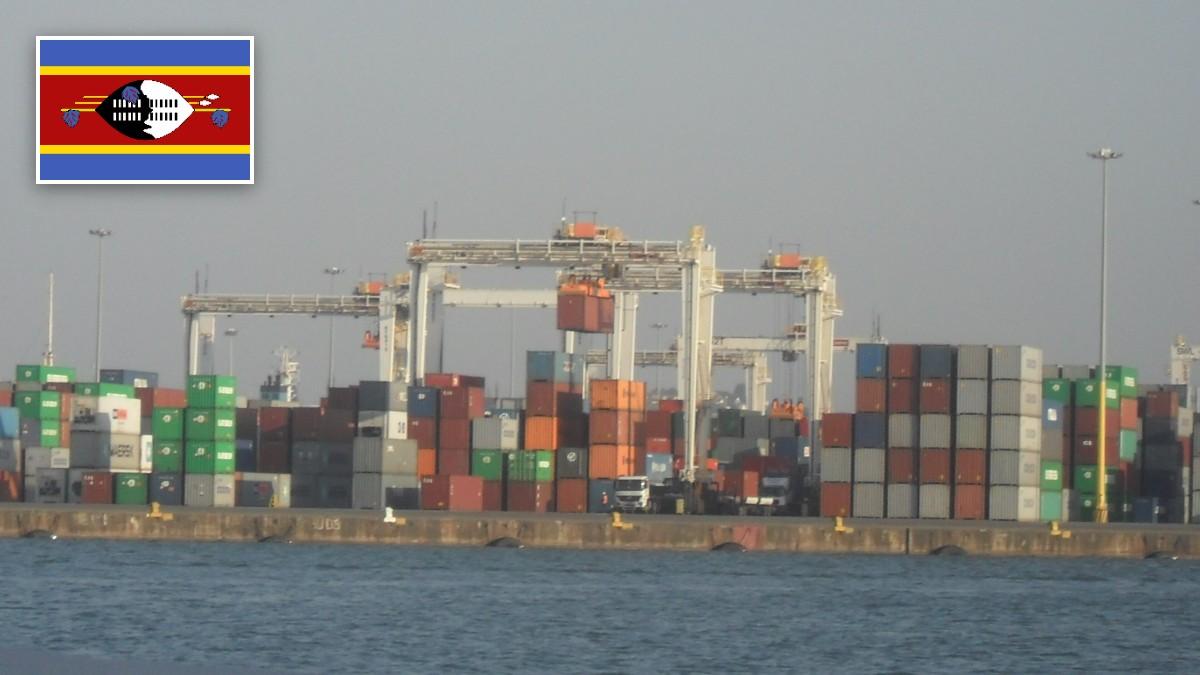
Turkey to Eswatini (Swaziland) FCL, LCL and air freight: the Durban–Matsapha route, what drives the price, a worked cost simulation with 15% VAT, import permits and documents.
Last updated: 23 November 2026
How do you ship from Turkey to Eswatini?
Shipping commercial cargo from Turkey to Eswatini (formerly Swaziland) is fully possible, but because Eswatini is landlocked, freight first reaches a seaport or airport and then continues by road or rail. For containers, the most common route is ocean freight from Turkish ports to Durban in South Africa, followed by rail or truck to Matsapha, Eswatini's main industrial hub. For urgent, lighter shipments, air freight to Johannesburg plus road haulage through the Oshoek/Ngwenya border post is usually the most practical option.
Your cost depends on volume and weight, container type, Incoterm, inland transport after Durban, and the customs duty plus 15% VAT payable in Eswatini. This guide covers your shipping options, what drives the price, a worked cost simulation, transit-time logic and the documents you need.
If your cargo is ready, you can start now: request a Turkey–Eswatini freight quote.
What are the shipping options from Turkey to Eswatini?
FCL ocean freight: Port of Durban plus rail or truck
For cargo that fills a 20ft or 40ft container (building materials, furniture, machinery, packaging, food), full container load (FCL) is the most economical solution. Cargo sails from Turkish ports such as Istanbul (Ambarli), Mersin or Izmir to Durban, usually on transshipment services. From Durban it moves on the Eswatini Railways link to the Matsapha inland container depot (ICD), or by truck directly to the consignee's warehouse.
Matsapha ICD hosts the revenue authority, a bonded warehouse, freight forwarders and shipping line agents, and it is described as the country's second-largest import/export entry point after the Ngwenya border post.
LCL (groupage) ocean freight
Cargo that does not fill a container travels as LCL. It is devanned at a consolidation warehouse in Durban and distributed by road to Eswatini. Pricing is per cubic metre (CBM) or per tonne, whichever is greater. Because of the extra warehouse and handling steps, LCL transit is longer and less predictable than FCL.
Air freight via Johannesburg
Eswatini's King Mswati III International Airport has a 3,580 m runway and a cargo facility able to handle wide-body aircraft, but its commercial cargo volume is very low and there is no direct cargo link from Turkey. In practice, cargo flies to South Africa on Turkish Airlines' Istanbul–Johannesburg services or on other carriers' connecting flights, then trucks via the Oshoek/Ngwenya border to Mbabane, Manzini or Matsapha. It suits spare parts, samples, urgent machine components and high-value goods.
Courier and express
For documents, samples and small parcels, door-to-door express is the fastest option. Because Eswatini is outside Europe, we do not publish a fixed per-kg courier rate for this lane; the price is quoted on chargeable weight and service level. Service details: Dexpell Courier & Express.
Door-to-door, DAP and DDP
Dexpell can coordinate pickup at your Turkish facility, export customs, the main freight leg, transit formalities in Durban and final delivery in Eswatini under one file. Under DAP, import duties and clearance are the buyer's responsibility. Under DDP, duties are paid on the shipper's behalf; DDP feasibility is confirmed case by case depending on the product, import permit requirements and the consignee's registration in Eswatini.
What determines the cost of shipping from Turkey to Eswatini?
Your freight and total cost are driven by: origin city and port, container type (20'DC, 40'DC, 40'HC), chargeable weight and volume, commodity and HS code, Incoterm (EXW, FCA, FOB, CFR, CIF, DAP, DDP), Durban port and terminal charges, Durban–Matsapha rail or truck haulage, border crossing and transit documentation, customs duty and VAT in Eswatini, cargo insurance, fuel surcharges and peak-season surcharges.
A buyer on EXW manages the whole chain, while on a CIF Durban quote the inland leg and duties still sit with the buyer. If your Eswatini customer expects delivery to their door, quote on a clear delivery point such as DAP Matsapha or DAP Manzini.
A note on market averages
As of this writing (23 November 2026) we could not find a reliable, sourced and current market average for ocean freight (per 20ft/40ft container or per CBM) or air freight (per kg) on the Turkey–Durban/Eswatini lane, so we are not quoting an estimated figure. Rates move frequently with carrier, transshipment hub, season and fuel costs, so a current price is only confirmed by a quote based on your cargo-ready date.
Worked Cost Simulation
1) Chargeable weight: actual or volumetric?
Courier/express example (divisor 5000): 3 cartons, each 50 × 40 × 40 cm and 12 kg. Volumetric weight per carton is 50 × 40 × 40 / 5000 = 16 kg, so 48 kg for three. Actual weight is 3 × 12 = 36 kg. Volumetric weight is higher, so the chargeable weight is 48 kg.
Air freight example (divisor 6000): 2 pallets, each 120 × 80 × 150 cm and 280 kg. Volumetric weight per pallet is 120 × 80 × 150 / 6000 = 240 kg, so 480 kg for two. Actual weight is 560 kg. This time actual weight is higher, so the chargeable weight is 560 kg.
Because Eswatini is a non-European destination, we do not apply a per-kg rate to these examples. Chargeable weight is the figure the quoted per-kg tariff is multiplied by; fuel surcharge, duties and fees are added separately.
2) Eswatini duty and tax example (landed cost)
Eswatini is a member of the Southern African Customs Union (SACU), and goods from outside SACU are subject to the common external tariff. According to the U.S. International Trade Administration's Eswatini guide, tariff rates generally range from 0 to 30 percent, with some higher, such as apparel. Standard VAT on imports is 15%. A simplified example:
Customs value (example): USD 10,000
Customs duty (example rate 20%; the real rate depends on the HS code): USD 2,000
VAT at 15% (simplified base USD 10,000 + 2,000 = 12,000): USD 1,800
Total import taxes: USD 3,800 (excluding freight, insurance, port and inland charges)
This calculation illustrates the mechanism only. The exact customs value and VAT base are defined by Eswatini Revenue Service (ERS) rules; confirm your product's tariff classification and rate with your customs broker.
Want to run this simulation with your own carton sizes, weights and invoice value? Send the details to Dexpell.ai Chat and we will work out the chargeable weight and cost lines for your actual shipment.
How long does shipping from Turkey to Eswatini take?
Ocean transit has three legs: port-to-port from Turkey to Durban (usually via transshipment), discharge and transit paperwork in Durban, and the Durban–Matsapha inland leg. The Eswatini Railways Durban–Matsapha line is about 301 km; according to the Logistics Capacity Assessment this leg takes around 3 days, with 3 trains a week. Port-to-port transit varies by carrier and transshipment hub, so exact days are confirmed at booking.
With air freight, the Istanbul–Johannesburg flight is short; the real variables are cargo release in Johannesburg, transit documents and the Oshoek/Ngwenya border crossing. Common delay causes include missing import permits, invoice and packing list mismatches, wrong tariff codes, congestion in Durban, truck queues at the border and peak-season demand.
Which trade gateways serve Eswatini?
Durban (South Africa): the main port for containers bound for Eswatini. Richards Bay (South Africa), Maputo and Matola (Mozambique): other ports linked to Eswatini Railways; Maputo is a geographically close alternative for the east of the country. Matsapha ICD: the inland container depot in the industrial area between Manzini and Mbabane. Ngwenya / Oshoek: the main border post for trucks arriving from the Johannesburg direction. King Mswati III International Airport: the country's international airport.
What goods are shipped from Turkey to Eswatini?
Commercially relevant cargo groups include building materials such as ceramics, sanitaryware and steel products, furniture and home textiles, dry and packaged food, machinery and spare parts, packaging materials, and apparel and textiles. Plan from the start for higher tariff rates on apparel and for import permits on electrical appliances, motor vehicle parts, medicines and agricultural products.
Shipping machinery and spare parts from Turkey to Eswatini
Machinery for plants in the Matsapha industrial area travels by FCL if it fits a standard container, or on flat rack or open top equipment if it is out of gauge, to Durban; from there suitable trucks and permits are planned for heavy loads. For urgent spare parts, air freight via Johannesburg is the most practical way to shorten production downtime. Remember that motor vehicle parts require an import permit.
Which documents are required and how does Eswatini customs work?
The core document set: commercial invoice, packing list, bill of lading (B/L) or air waybill (AWB), Turkish export declaration, certificate of origin where required, and an Eswatini import permit for regulated goods.
According to the U.S. International Trade Administration's Eswatini guide, goods from outside SACU must be cleared through customs at the first port of entry into SACU, with a bill of entry submitted alongside copies of the supplier's invoices and an Eswatini import permit. The same source lists permits for agricultural products, mineral fuels and oils, used clothes, motor vehicle parts, used cars, medicinal drugs and electrical appliances, issued by the Ministry of Finance and Ministry of Agriculture. Customs and excise in Eswatini are administered by the ERS Customs and Excise Department. For cargo routed through Durban, confirm the clearance point and transit procedure with your consignee's customs broker for each shipment.
What does Dexpell handle on this route?
We arrange pickup from any city in Turkey, export customs, FCL and LCL bookings, and special equipment such as flat racks and open tops. As an IATA cargo agent we book air freight directly with Turkish Airlines and other carriers, which lets us negotiate capacity and rates on the Johannesburg lane. We coordinate transit and inland haulage with our partner agent in Durban, delivery to Matsapha or the consignee's door, cargo insurance and shipment tracking in one file.
Get your Turkey–Eswatini freight quote
Calculate your current freight cost now. Include in the quote form: pickup city and postcode, delivery city in Eswatini (Matsapha, Manzini, Mbabane, etc.), product description and HS code, number of cartons or pallets, dimensions or CBM, gross weight, container type (if applicable), Incoterm and cargo-ready date. Quote form: https://www.dexpell.com/en/quote
Prefer email? You can also send your shipment request directly to info@dexpell.com.
Frequently Asked Questions
Can I ship a container from Turkey to Eswatini?
Yes. Containers usually travel by sea from Turkish ports to Durban, then by rail to the Matsapha inland container depot or by truck directly to the consignee. 20ft, 40ft and LCL options are available.
How much does shipping from Turkey to Eswatini cost?
The price depends on container type or chargeable weight, Incoterm, inland transport after Durban and import taxes. There is no reliable published market average for this lane, so current pricing is provided by quote based on your cargo-ready date.
What is the import VAT rate in Eswatini?
Eswatini's standard VAT rate is 15% and it applies to imported goods. Some supplies are zero-rated or exempt, and customs duty may also apply under the SACU common external tariff.
Which goods need an import permit for Eswatini?
According to the U.S. International Trade Administration guide, permits are required for agricultural products, mineral fuels and oils, used clothes, motor vehicle parts, used cars, medicinal drugs and electrical appliances. The list can change, so confirm with your buyer before loading.
Is air freight available from Turkey to Eswatini?
Yes, but with no direct cargo link from Turkey, shipments usually fly to Johannesburg and continue by road through the Oshoek/Ngwenya border. It is the fastest option for urgent, lighter cargo.
How long does cargo take from Durban to Matsapha?
The Eswatini Railways Durban–Matsapha line is about 301 km and this leg takes roughly 3 days. By truck, timing depends on port release and border congestion.
Can Dexpell deliver to a door in Eswatini?
Yes. With our partner agent in Durban we coordinate inland transport and door delivery to Matsapha, Manzini, Mbabane and other locations. DAP or DDP feasibility is confirmed per shipment depending on the product and permit status.
Which documents do I need for Eswatini?
Commercial invoice, packing list, B/L or AWB, export declaration and, where required, a certificate of origin and import permit. Consistent product descriptions, weights and values across all documents prevent customs delays.
Related Guides
Shipping from Turkey to South Africa: Durban Guide
Container Shipping from Turkey to Mozambique
Turkey to Botswana Shipping via Durban
Turkey to Zimbabwe Shipping: Beira and Durban Routes
Turkey to Namibia Shipping: Walvis Bay
Dexpell Courier & Express Service
Sources: U.S. International Trade Administration, Eswatini Country Commercial Guide (import tariffs; import requirements and documentation, 9 February 2026); PwC Worldwide Tax Summaries – Eswatini (reviewed 17 November 2026); WFP Logistics Capacity Assessment (LCA) – Eswatini railway and aviation sections. Photo: "Port of Durban containers" by Christophe Badoux, CC BY-SA 3.0, via Wikimedia Commons; Flag of Eswatini: public domain, Wikimedia Commons.

By
Dexpell LogisticsInternational Logistics & Trade
Dexpell Logistics is an international freight forwarding company offering sea, air and road transport, project logistics and trade consulting across 90+ countries. The news, guides and analyses on this blog are produced by the Dexpell expert team.
Dexpell is here for your logistics needs
Sea, air, and road freight, project logistics, and trade consulting across 90+ countries.
