
FCL/LCL container, air freight and door-to-door shipping from Turkey to Egypt: Alexandria, El Dekheila, Port Said, Damietta and Cairo gateways; ACI/ACID and CargoX requirements, EUR.1, freight cost drivers and how to get a quote.
Last Updated: 7 October 2026
How Does Shipping from Turkey to Egypt Work? The Short Answer
Shipping from Turkey to Egypt is a short Eastern Mediterranean sea route: cargo moves from Turkish ports such as Mersin, Iskenderun, Ambarli and Aliaga to Alexandria, El Dekheila, Port Said and Damietta as FCL (full container) or LCL (groupage), while urgent and lightweight shipments go by air freight to Cairo. Freight cost depends on container type, cargo weight and volume, commodity, Incoterm, loading and discharge port, inland haulage and customs services. This guide explains what drives the price, how to think about transit time, Egypt's mandatory ACI/ACID pre-arrival system and what information you need for a fast freight quote.
The single most important point for Egypt: every sea and air shipment needs an ACID number, obtained by the Egyptian consignee on the Nafeza platform before loading. Shipments moved without it can face serious clearance problems on arrival. We walk through the process step by step below.
Note also that the Turkey–Egypt ocean route does not pass through the Red Sea or the Bab el-Mandeb Strait: Alexandria, Port Said and Damietta are on the Mediterranean coast. Regional tensions can still move fuel and insurance surcharges, but the route stays outside the direct risk zones that affect Gulf-bound services.
What Are the Shipping Options from Turkey to Egypt?
FCL Container Shipping (20ft and 40ft)
For exporters with enough cargo to fill a container, FCL is usually the most economical option. A 20ft DC suits heavy, dense cargo (steel products, marble, chemical raw materials), while 40ft DC and 40ft HC suit bulky cargo (furniture, textiles, home appliances, packaging). Flat rack or open top containers can be used for heavy machinery and out-of-gauge equipment.
LCL Groupage Shipping
For a few pallets, LCL lets you pay for the volume (cbm) or weight you actually use rather than a whole container. Cargo is consolidated at a warehouse in Turkey and deconsolidated at the Egyptian discharge port. Remember that each LCL consignment needs its own ACID number and a complete document set.
Air Freight: Istanbul to Cairo
Air freight is the fastest option for samples, spare parts, urgent production inputs and high-value, low-volume goods. Besides belly capacity on passenger flights between Istanbul and Cairo, EgyptAir operates two weekly Airbus A330 freighter flights between Istanbul and Cairo as of August 2026. Since 1 January 2026, Egypt has made ACI mandatory for air cargo as well, and the ACID number must appear on the air waybill (AWB).
Ro-Ro and Road Transport
A Ro-Ro line once operated between Iskenderun and Port Said/Damietta, but it was suspended in 2014. Turkey and Egypt have agreed to work on reviving it, yet as of today there is no regular scheduled Turkey–Egypt Ro-Ro service. In practice, commercial cargo to Egypt moves by ocean container or air freight. We will update this guide if a Ro-Ro line resumes.
Project Cargo and Heavy Equipment
Transformers, generators, production lines and steel structures for energy, construction and industrial investments move as breakbulk or in special-equipment containers. Port equipment, route surveys, lashing plans and special trucks at destination must be planned in advance.
What Determines the Freight Cost from Turkey to Egypt?
Turkey–Egypt freight rates change frequently with carrier schedules, season and fuel costs, so quoting a fixed figure would be misleading. The main cost drivers are:
Mode and container type: 20ft DC, 40ft DC, 40ft HC, flat rack/open top or LCL; for air freight, the higher of actual and volumetric weight (chargeable weight).
Port pair: Mersin, Iskenderun, Ambarli or Aliaga origin; Alexandria, El Dekheila, Port Said or Damietta destination. Direct and transshipment services differ in both price and time.
Incoterm: EXW, FCA, FOB, CFR, CIF, DAP or DDP determine who pays which costs and what the quote covers.
Commodity and HS code: Dangerous goods (IMO), temperature-controlled or out-of-gauge cargo require surcharges and special equipment.
Surcharges: Bunker adjustment factor (BAF), terminal handling (THC), B/L fees, peak season and possible risk surcharges. Fuel and insurance items can move with regional tensions.
Inland haulage and customs: Pickup from your factory in Turkey, export customs, import clearance in Egypt and delivery to industrial zones such as 10th of Ramadan or 6th of October.
Free time and demurrage: Missing documents or ACID data extend port dwell time in Egypt and create demurrage and storage costs.
How Long Does Shipping from Turkey to Egypt Take?
Turkey–Egypt is one of the shortest container routes out of Turkey, but actual time depends on the service. Think of it in three parts:
Port-to-port: A short sea passage on direct services; transshipment via an Eastern Mediterranean hub can extend it noticeably. We confirm the current sailing and vessel schedule at quotation stage.
Airport-to-airport: Istanbul–Cairo air freight is usually the fastest option; capacity, booking and ACID validation set the timeline.
Door-to-door: Add pickup and export customs in Turkey, vessel cut-off, customs inspection in Egypt and final delivery.
The most common causes of delay are missing or mismatched ACID data, documents uploaded late to CargoX, discrepancies between invoice and bill of lading, physical customs inspections and holiday-period congestion.
Main Ports and Airports in Egypt
Alexandria and El Dekheila: The most common gateway for cargo bound for Cairo and the Nile Delta industrial zones, and close to the Borg El Arab industrial area.
Port Said (East and West): At the northern entrance of the Suez Canal; important for facilities in the Suez Canal Economic Zone (SCZone).
Damietta: A Mediterranean port serving the Delta and the furniture-making hub of Damietta.
Ain Sokhna: On the Gulf of Suez, close to industrial areas east of Cairo. Because it requires a canal transit from Turkey, Mediterranean ports are usually preferred for Turkish cargo.
Cairo International Airport (CAI): The main air cargo gateway.
What Do Turkish Exporters Ship to Egypt?
According to Turkish Trade Minister Ömer Bolat, Turkey–Egypt bilateral trade reached about USD 8 billion in 2025, with a target of USD 15 billion. Leading cargo groups include iron and steel products, machinery and spare parts, automotive components, textile inputs such as yarn and fabric, plastics and chemical raw materials, construction materials, furniture and food products.
Shipping Machinery and Production Lines from Turkey to Egypt
For machinery going to factories in Egyptian industrial zones, dismantled shipment, wooden crate or skid packing, moisture protection and weight distribution plans matter. For heavy single-piece units, we assess flat rack or breakbulk options against crane capacity at the discharge port.
Textile Inputs and Raw Materials
Yarn, fabric and trims usually move in 40ft HC containers on a regular cycle. For production-linked cargo, sailing reliability and customs dwell time matter as much as the freight rate.
Egypt ACI/ACID: What You Must Know Before Loading
Egypt's Advance Cargo Information (ACI) system lets customs run risk assessments before cargo arrives. It has been mandatory for sea freight since 1 October 2021 and for air freight since 1 January 2026. In short:
1. The consignee obtains the ACID: The Egyptian importer obtains the ACID (Advance Cargo Information Declaration) number on the Nafeza platform using the proforma invoice and passes it to the exporter.
2. The exporter must be registered on CargoX: The Turkish exporter uploads the commercial invoice and other shipping documents electronically via CargoX before dispatch.
3. The ACID number appears on the documents: It must be shown on the commercial invoice, the bill of lading and, for air cargo, the AWB.
4. Deadlines: For air shipments, the ACID filing must be completed at least 8 hours before departure; for sea shipments the document flow must also be completed before the vessel sails.
The most frequent problem in practice is a mismatch between the proforma (description, quantity, value, HS code) and the final invoice and B/L. At Dexpell we check the ACID number and document consistency at booking stage.
Documents Required for Exports to Egypt
Commercial invoice (showing the ACID number)
Packing list
Bill of lading (B/L) or air waybill (AWB)
Certificate of origin; to benefit from preferential duty under the Turkey–Egypt Free Trade Agreement, typically an EUR.1 movement certificate
Export declaration
Product-specific documents: conformity or health certificates for groups such as food, cosmetics and electrical products
For certain consumer product groups (e.g. furniture, home textiles, small appliances, cosmetics), Egypt may require the foreign manufacturer to be registered with the General Organization for Export and Import Control (GOEIC). Egypt's standard VAT rate is 14%, while customs duty depends on the tariff line and origin rules. We recommend confirming your product's status by HS code with your consignee before shipment.
What Dexpell Handles on the Turkey–Egypt Lane
Pickup anywhere in Turkey and consolidation warehousing
Export customs and coordination of EUR.1 / origin documents
Pre-booking checks of the ACID number and CargoX document flow
FCL, LCL, flat rack/open top and project cargo bookings
Istanbul–Cairo air freight bookings as an IATA cargo agent
Import clearance with partner agents in Egypt and door delivery to Cairo, Alexandria, the Delta and SCZone
Cargo insurance and shipment tracking
Get Your Turkey–Egypt Freight Quote
To receive current freight rates and transit time for your Egypt shipment, have these details ready: pickup city, destination city/port, commodity and HS code, gross weight, dimensions or volume, container type, Incoterm and your consignee's ACID status.
Request a Turkey–Egypt shipping quote: https://www.dexpell.com/en/quote
You can also send your freight request to info@dexpell.com.
Frequently Asked Questions
How much does it cost to ship a container from Turkey to Egypt?
The price depends on container type, port pair, season, bunker surcharge and Incoterm. There is no fixed tariff; we prepare a current quote based on your cargo details.
How long does sea freight from Turkey to Egypt take?
Turkey–Egypt is a short Mediterranean route, but transit varies with direct or transshipment service and customs processing. We confirm the current sailing schedule when quoting.
Does every shipment to Egypt need an ACID number?
Yes. ACID has been mandatory for sea freight since 2021 and for air freight since 1 January 2026. The Egyptian consignee obtains it on Nafeza and the exporter submits documents via CargoX.
Which Turkish ports are used for shipments to Egypt?
The most common origin ports are Mersin, Iskenderun, Ambarli and Aliaga. The choice depends on your factory location and the carrier's sailing schedule.
Which Egyptian port should I ship to?
Alexandria or El Dekheila are usually preferred for Cairo and the Delta, Port Said for SCZone and the canal area, and Damietta for the Damietta region.
Is air freight available from Turkey to Egypt?
Yes. The Istanbul–Cairo lane has both passenger-belly and freighter capacity. Air shipments also need the ACID number on the AWB.
Are there customs duties between Turkey and Egypt?
Many industrial goods can benefit from preferential duty under the Turkey–Egypt Free Trade Agreement, usually with an EUR.1. VAT also applies in Egypt. Confirm your product's status by HS code.
Can Dexpell deliver door-to-door in Egypt?
Yes. With our partner agents in Egypt we coordinate customs clearance and delivery to Cairo, Alexandria, the Delta and the canal zone, planned according to your Incoterm.
Related Services and Articles
Shipping from Turkey to Libya: https://www.dexpell.com/en/media/blog/shipping-from-turkey-to-libya
Shipping from Turkey to Lebanon: https://www.dexpell.com/en/media/blog/shipping-from-turkey-to-lebanon
Turkey to Jordan shipping: https://www.dexpell.com/en/media/blog/turkey-to-jordan-shipping
Shipping from Turkey to Saudi Arabia: https://www.dexpell.com/en/media/blog/shipping-from-turkey-to-saudi-arabia
Shipping from Turkey to Tanzania: https://www.dexpell.com/en/media/blog/shipping-from-turkey-to-tanzania
Alternative shipping routes from Turkey to the Gulf: https://www.dexpell.com/en/media/blog/alternative-shipping-routes-turkey-to-gulf
Importer of Record services in Turkey: https://www.dexpell.com/en/media/blog/importer-of-record-ior-services-in-turkey-import-without-setting-up-your-own-com
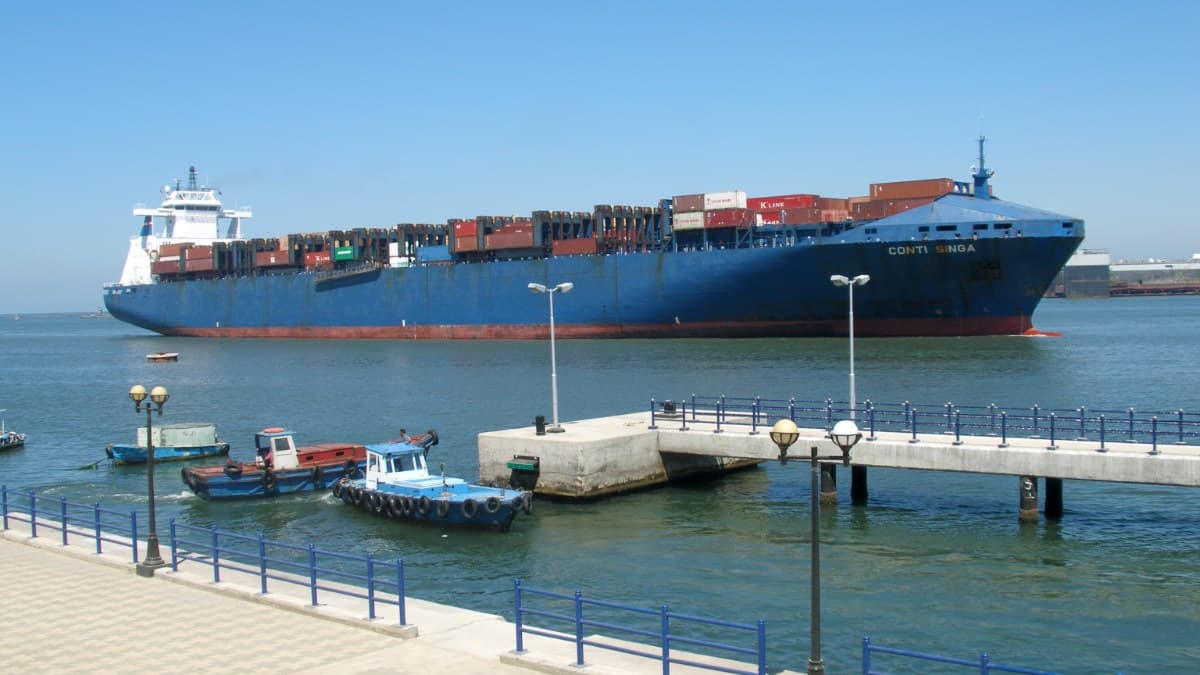
Cover image: "Container ship Conti Singa, Suez Canal" by Vyacheslav Argenberg, Wikimedia Commons, licensed under CC BY 2.0; cropped.

By
Dexpell LogisticsInternational Logistics & Trade
Dexpell Logistics is an international freight forwarding company offering sea, air and road transport, project logistics and trade consulting across 90+ countries. The news, guides and analyses on this blog are produced by the Dexpell expert team.
Dexpell is here for your logistics needs
Sea, air, and road freight, project logistics, and trade consulting across 90+ countries.
