
Amid ongoing tensions in the Strait of Hormuz and the Red Sea, here are the current alternative ways to move cargo from Turkey to Qatar: sea-plus-road via Salalah (Oman), Istanbul-Doha air freight, charter, and multimodal options. Last Updated: August 12, 2026.
Last Updated: August 12, 2026
Ongoing security tensions in the Strait of Hormuz and the elevated risk of attacks in the Red Sea continue to disrupt container and bulk shipping routes to Qatar. If you need to move cargo from Turkey to Qatar right now, the practical options are: sea-plus-road via Salalah, Oman; direct scheduled air freight from Istanbul to Doha (Turkish Cargo, Qatar Airways Cargo); charter cargo aircraft for urgent or high-volume shipments; and multimodal combinations of the above. Below you'll find when each option makes sense, what determines cost, and what customs steps are involved. Because conditions can shift quickly, always reconfirm routing before shipping.
Why the Standard Sea Route to Qatar Is Disrupted
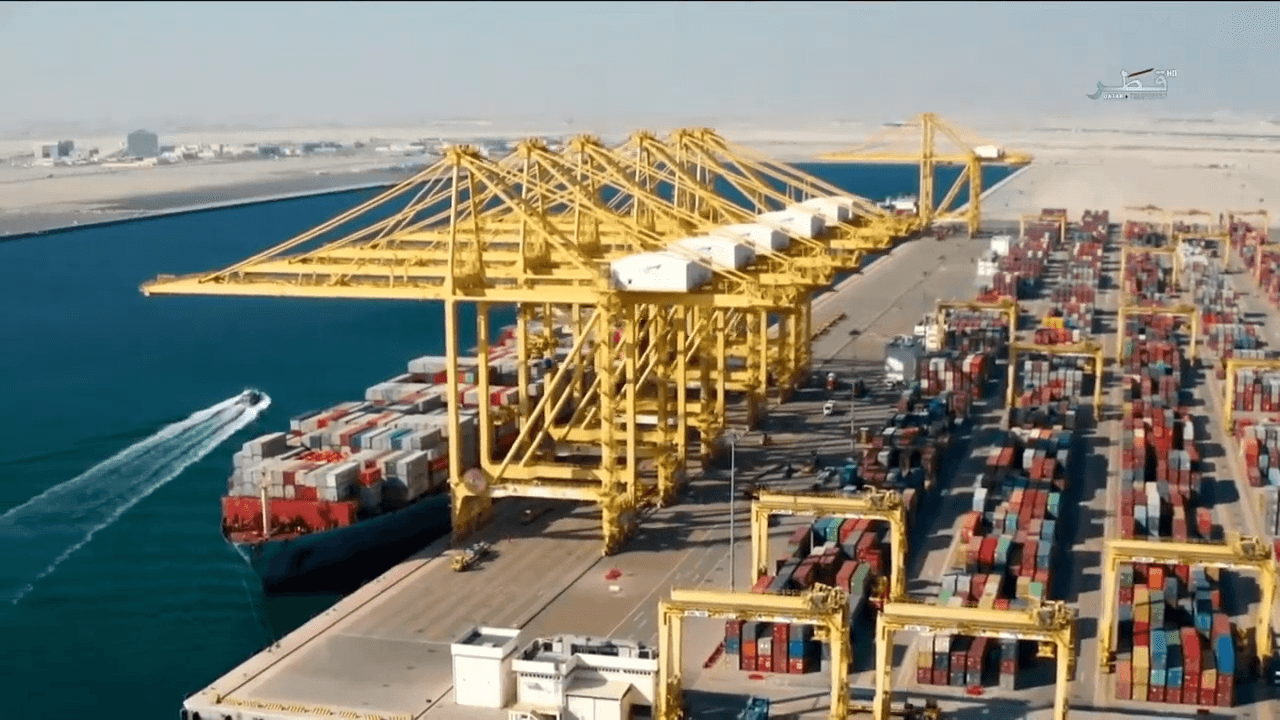
Since late February 2026, tensions in the Strait of Hormuz have sharply reduced commercial vessel traffic into the Gulf; war-risk insurance premiums have climbed from roughly 0.25% of hull value to a range of 3-10%. Hamad Port, Qatar's main gateway, remains physically operational, but insurance costs and routing uncertainty continue to constrain normal call patterns. Qatari authorities announced the resumption of some commercial vessel movements in spring 2026, but as of August 2026 conditions in and around the Strait remain volatile, with intermittent interference reported, so route reliability should be reconfirmed at time of shipping. Separately, Houthi attacks in the Red Sea continue, and most carriers still default to Cape of Good Hope routing, keeping Suez Canal traffic well below pre-2024 levels.
Alternative Transport Options to Qatar
Sea-Plus-Road via Salalah, Oman
Instead of relying on direct Hormuz transits into Hamad Port, carriers have been discharging containers at Salalah, Oman, and trucking them onward into the Gulf, a land-bridge route that Qatar itself has designated as a substitute path when Hamad access is constrained. The Salalah route tends to be more predictable than a direct Hormuz transit, though the added inland leg extends total transit time.
Transshipment via Jeddah — Proceed with Caution
On the Red Sea side, Jeddah has absorbed a large share of diverted Gulf-bound volume, but by mid-2026 yard utilization there reached roughly 90%, with some vessels waiting over 20 days for a berth and container pickup delays running six to eight weeks. Several major carriers have suspended or rerouted northern Gulf transshipment via Jeddah to ports like Khorfakkan and Salalah instead. Jeddah routing to Qatar should therefore be evaluated alongside other options and confirmed against current congestion data, not treated as a standalone fix.
Air Freight to Doha
Turkish Cargo operates a scheduled network from its SMARTIST cargo hub at Istanbul Airport with connections to Qatar, and Qatar Airways Cargo runs an extensive network from its Doha hub. For time-sensitive, high-value, or urgent shipments, air freight remains the most predictable way to bypass sea-route uncertainty.
Charter Cargo Aircraft
For large-volume or project cargo that exceeds scheduled freighter capacity, charter aircraft can be arranged, subject to aircraft availability and advance planning. This is not a routine walk-up service.
Multimodal Combinations
Sea-plus-road via Salalah or air-plus-road combinations can be balanced against cost, urgency, and cargo type, particularly useful for exporters shipping mixed cargo profiles.
Europe-to-Qatar Transit via Turkey
This routing need isn't limited to Turkish-origin exporters. European shippers moving cargo to Qatar can also route through Turkey as a consolidation and transit point, leveraging Turkey's road, Middle Corridor rail, sea, and air connections, with Dexpell supporting the transit and consolidation process at the Istanbul end.
Shipping Cost: What Determines the Price
Cost to Qatar depends on cargo type, chargeable weight versus volume, transport mode (sea-plus-road combination versus air freight), Incoterm (EXW, FOB, FCA, DDP, etc.), insurance coverage including current war-risk premiums, and port/transshipment handling charges along the route. Because rates can shift week to week under current conditions, request a live quote rather than relying on a fixed figure.
Transit Time & Delivery Timeline
For the Salalah sea-plus-road combination, total transit time includes the ocean leg to Oman plus the inland leg into Qatar, and varies compared with a direct Hormuz transit. Full ocean routings via the Cape of Good Hope add roughly 10-14 days versus pre-disruption routing. Air freight from Istanbul to Doha can move in a matter of days, though the exact timeline depends on current flight and capacity availability. For a firm delivery date, request a quote based on current routing and schedules.
Documentation & Customs Clearance
Shipments to Qatar typically require a commercial invoice, packing list, certificate of origin, bill of lading or air waybill, and product-specific certificates where applicable. For cargo moved via the Salalah land-bridge route, additional transit documentation and Oman-Qatar border crossing procedures apply. Since requirements can vary by shipment type, confirm the exact document list with Dexpell's customs team before shipping.
Dexpell's Operational Support
For Qatar-bound alternative routing, Dexpell provides multimodal routing advice, charter cargo coordination, customs and transit documentation support, and up-to-date routing and capacity information. As an IATA-recognized cargo agent in Turkey, Dexpell works directly with airlines to track available freighter capacity and schedules.
Get a Current Route and Freight Quote for Qatar
Share your origin, destination (Doha/Qatar), commodity, weight, dimensions, pallet or container quantity, Incoterm, and required delivery date to receive current routing and freight information. https://www.dexpell.com/en/quote
Frequently Asked Questions
Can I currently ship by sea from Turkey to Qatar?
Direct sea routes remain unreliable due to Strait of Hormuz restrictions; the sea-plus-road combination via Salalah, Oman is currently used as a more predictable alternative.
Is there direct air cargo service from Istanbul to Doha?
Yes. Turkish Cargo operates a scheduled network from Istanbul Airport to Qatar, and Qatar Airways Cargo runs an extensive network from its Doha hub.
Is routing via Jeddah a safe option?
Jeddah has experienced high yard utilization and long berth waits as of mid-2026, so it should be evaluated together with other routing options and confirmed against current port conditions, not used as a sole solution.
How is freight cost calculated?
Cargo type, weight and volume, transport mode, Incoterm, insurance, and current war-risk premiums are the main cost drivers; request a current quote for an exact figure.
Is DDP delivery available?
Yes, DDP (Delivered Duty Paid) can be arranged for eligible shipments, specify this when requesting a quote.
When does charter cargo make sense?
Charter aircraft are used for large-volume, urgent, or project cargo that exceeds scheduled freighter capacity, subject to aircraft availability and advance planning.
What documents are required?
A commercial invoice, packing list, certificate of origin, bill of lading or air waybill, and product-specific certificates where applicable; land-bridge shipments require additional transit documentation.
How often is routing information updated?
Conditions in the Strait of Hormuz and Red Sea can change weekly, so Dexpell confirms current routing and capacity information before every shipment.
Can European exporters use Turkey as a transit point to reach Qatar?
Yes. Turkey's road, rail (Middle Corridor), sea, and air connections allow European-origin cargo to be consolidated through Istanbul and forwarded to Qatar.
Related Services & Articles
https://www.dexpell.com/en/media/blog/alternative-shipping-routes-turkey-to-gulf
https://www.dexpell.com/en/media/blog/turkey-to-uae-alternative-shipping-options
https://www.dexpell.com/en/media/blog/syria-road-freight-2026-new-regulations-opportunities
https://www.dexpell.com/en/media/blog/global-trade-risk
Last Updated: August 12, 2026. Conditions in the region can change rapidly, please reconfirm current routing and pricing with Dexpell before shipping.
Photo: Ministry of Transport (MOT) Qatar via YouTube, CC BY 3.0, via Wikimedia Commons.

By
Dexpell LogisticsInternational Logistics & Trade
Dexpell Logistics is an international freight forwarding company offering sea, air and road transport, project logistics and trade consulting across 90+ countries. The news, guides and analyses on this blog are produced by the Dexpell expert team.
Dexpell is here for your logistics needs
Sea, air, and road freight, project logistics, and trade consulting across 90+ countries.
