
Container, LCL and air freight from Turkey to the Republic of Congo (Congo-Brazzaville): Pointe-Noire port, inland delivery to Brazzaville, ECTN/BESC, CEMAC duty bands and 18.9% VAT, with a worked landed-cost simulation. Get a Dexpell quote.
Last updated: 13 November 2026
How do you ship from Turkey to the Republic of Congo?
Commercial cargo from Turkey to the Republic of Congo (Congo-Brazzaville) moves mainly by sea, as FCL or LCL containers into the Port of Pointe-Noire; urgent and lighter cargo goes by air freight from Istanbul to Pointe-Noire or Brazzaville. Your freight cost is driven by container type, cargo weight and volume, the Turkish port of loading, the transshipment hub, the Incoterm and any inland road or rail leg to Brazzaville. This guide covers the cost drivers, realistic transit-time logic, the ECTN/BESC requirement, CEMAC import duties and a worked landed-cost simulation.
Note: this article covers the Republic of Congo (capital Brazzaville). For Kinshasa and Matadi, see our Turkey to DR Congo shipping guide.
If you already know your cargo dimensions, a current Pointe-Noire estimate takes only a few minutes: request your Turkey–Congo freight quote.
What shipping options exist from Turkey to Congo?
FCL containers (20' / 40' / 40' HC)
Full containers are the most economical option for bulky exports such as construction materials, steel products, flour and food, furniture, ceramics and machinery. Cargo usually leaves from Mersin, Ambarli (Istanbul), Gemlik or Izmir and reaches Pointe-Noire via a West African or Mediterranean transshipment hub.
LCL consolidated cargo
For a few pallets or a few cubic metres, LCL is the practical choice. LCL is charged on a weight/measure (W/M) basis, where 1 tonne = 1 m³ and the larger figure applies; destination devanning and warehouse charges also apply.
Air freight
Spare parts, samples, medical items, electronics and urgent project materials usually fly. Turkish Airlines lists Istanbul–Pointe-Noire service with a stop, while Brazzaville (Maya-Maya) is served through connecting options. Schedules change, so capacity is confirmed before booking.
Door-to-door and project cargo
Inland delivery from Pointe-Noire to Brazzaville runs over the RN1 highway (a journey of more than roughly 500 km) or the Congo-Ocean Railway (CFCO). Out-of-gauge machinery, generators or steel structures need separate planning with flat rack / open top containers or breakbulk.
What determines the freight price?
The main cost drivers on Turkey–Congo shipments are: container type and quantity; gross weight and volume (chargeable weight for air); Turkish port of loading and transshipment routing; carrier capacity and season; the Incoterm (EXW, FOB, CFR, CIF, DAP, DDP); fuel and peak surcharges (BAF, PSS); destination THC and delivery charges; the ECTN/BESC fee; import duties; inland road or rail to Brazzaville; and cargo insurance.
About market averages: as of this update (13 November 2026) we could not find a reliable, dated published market average for Turkey–Pointe-Noire ocean freight (per 20'/40' or per CBM) or air freight (per kg). We therefore do not quote an estimate; West-Central Africa rates move weekly with transshipment and carrier capacity. A cargo-specific quote is the only accurate figure.
Worked Cost Simulation
1) Chargeable weight example (air freight and courier)
Take 4 cartons, each 80 × 60 × 50 cm and 35 kg. Total actual weight is 4 × 35 = 140 kg.
Air freight uses a volumetric divisor of 6000: 80 × 60 × 50 / 6000 = 40 kg per carton, 160 kg in total. The chargeable weight is the higher figure: 160 kg.
Courier/express uses a divisor of 5000: 80 × 60 × 50 / 5000 = 48 kg per carton, 192 kg in total, so the chargeable weight is 192 kg. Dexpell has no published courier per-kg rate for Congo, so this example shows the mechanism only.
Shipped LCL, the same 4 cartons total 0.96 m³ and 0.14 tonnes; under W/M they are usually billed at the 1 m³ (1 revenue tonne) minimum.
2) Destination duty and tax example (landed cost)
The Republic of Congo applies the CEMAC Common External Tariff on CIF value: 5% for basic necessities, 10% for raw materials and capital goods, 20% for intermediate goods and 30% for consumer goods. VAT is 18%, plus a surtax of 5% of the VAT amount, for an effective 18.9%. Additional CIF-based levies include the 1% CEMAC integration tax, 0.2% African integration contribution, 0.2% statistical tax, 0.05% OHADA contribution, 0.04% CEEAC contribution and a computer-system royalty generally at 2% (PwC Worldwide Tax Summaries, reviewed 7 August 2026).
Example A – Furniture (consumer goods, 30%): CIF value USD 20,000. Duty USD 6,000; other CIF-based levies (3.49%) USD 698. Assuming the VAT base is CIF + duty + other levies, the base is USD 26,698 and VAT (18.9%) is about USD 5,046. Total taxes are roughly USD 11,744 (about 59% of CIF).
Example B – Machinery (capital goods, 10%): CIF value USD 50,000. Duty USD 5,000; other levies USD 1,745; VAT about USD 10,725. Total taxes roughly USD 17,470.
These are illustrative: they exclude port, ECTN, customs brokerage and storage charges, and the tariff classification, exemptions or investment incentives can change the result. Always base the final calculation on your product's HS code.
Want to run the same simulation with your own carton sizes, weights and product value? Send the details to Dexpell.ai Chat and we will work out the chargeable weight and likely tax items for you.
For a current Congo-specific price: calculate your Pointe-Noire container freight.
How long does shipping from Turkey to Congo take?
Direct ocean services from Turkey to Pointe-Noire are limited, so cargo usually transships at a hub port. Port-to-port time therefore varies by carrier and transshipment dwell time and is measured in weeks. For door-to-door planning, treat each stage separately: loading and export customs in Turkey, ocean transit and transshipment, discharge and import clearance in Pointe-Noire, and the inland leg to Brazzaville.
Airport-to-airport air freight usually takes a few days depending on the connecting schedule, with clearance and delivery on top. The most common causes of delay are a missing ECTN, values that do not match the invoice, and congestion at the transshipment port.
Congo's main trade gateways
Port of Pointe-Noire: the country's only deep-water port and the main container gateway; Pointe-Noire is also Congo's oil and business hub. Brazzaville: the capital and second consumer market, reached from Pointe-Noire by the RN1 highway or the CFCO railway. Airports: Pointe-Noire Agostinho-Neto International and Brazzaville Maya-Maya. Deliveries to inland towns such as Dolisie and Oyo are planned by road.
Which products are shipped from Turkey to Congo?
Commercially important categories include flour, pasta and packaged food; rebar, profiles and steel products; ceramics, sanitaryware and construction chemicals; furniture and home textiles; apparel; household appliances; and generators, construction-equipment parts and industrial equipment.
Shipping machinery from Turkey to Congo
Machinery and capital goods usually fall in the 10% duty band. For heavy machines, dimensions, weight, lifting points and lashing plans should be settled before booking; out-of-gauge cargo needs flat rack or breakbulk plus a dedicated inland transport plan from Pointe-Noire.
Exporting food and construction materials to Congo
For food products, labelling, origin and any required health or conformity documents should be confirmed with the consignee in advance. For construction materials, weight usually sets the container payload limit, and a 20' container is often more efficient for heavy cargo.
Required documents and customs clearance
The core document set: commercial invoice, packing list, certificate of origin, bill of lading (B/L) or air waybill (AWB), export declaration and any product-specific certificates.
ECTN / BESC: shipments to the Republic of Congo require an Electronic Cargo Tracking Note (ECTN, locally BESC) issued for the Conseil Congolais des Chargeurs (CCC). The ECTN number must appear on the bill of lading, invoice and freight data must be consistent, and the application must be made in time relative to vessel departure; a missing or late ECTN can cause serious delays and extra cost at Pointe-Noire. Procedures can change, so current rules should be confirmed before each shipment.
Because the tariff classification decides the duty band (5/10/20/30%), the HS code must be consistent with the commercial invoice.
What Dexpell handles on the Turkey–Congo lane
Dexpell manages pickup anywhere in Turkey, export customs coordination, FCL/LCL ocean and air freight booking, ECTN/BESC follow-up, destination coordination with our agent in Pointe-Noire, inland delivery to Brazzaville, cargo insurance and project-cargo planning in a single file. As an IATA cargo agent, Dexpell books airline capacity and rates directly. For small or urgent shipments, see our Courier & Express service.
Get your Turkey–Congo freight quote
To receive a current, cargo-specific price for Pointe-Noire or Brazzaville, have ready: origin city/port, destination city (Pointe-Noire, Brazzaville or other), product description and HS code, gross weight, dimensions or total volume, container type (20'/40'/40' HC or LCL), Incoterm and cargo-ready date.
Get your Turkey–Congo freight rate now: https://www.dexpell.com/en/quote
Prefer email? You can also send your shipment request directly to info@dexpell.com.
Frequently Asked Questions
How much does it cost to ship a container from Turkey to Congo?
The price changes weekly with container type, port of loading, transshipment routing, carrier capacity, surcharges and Incoterm. No reliable dated market average is published for this lane, so you need a current, cargo-specific quote.
How long does sea freight from Turkey to Pointe-Noire take?
Direct services are limited, so transit depends on the transshipment port and dwell time and is measured in weeks. The carrier's current schedule is confirmed at booking.
Is an ECTN (BESC) mandatory for Congo?
Yes, shipments to the Republic of Congo require an ECTN/BESC issued for the CCC, and its number must appear on the bill of lading. Missing documents can cause delays and extra costs at destination.
What are import duty and VAT rates in Congo?
Under the CEMAC tariff, duty is 5%, 10%, 20% or 30%. VAT is 18%, effectively 18.9% with the surtax, plus roughly 3.5% in other CIF-based levies and contributions.
Can my cargo be delivered to Brazzaville?
Yes, inland delivery from Pointe-Noire to Brazzaville can be arranged by road or by the CFCO railway. Time and cost depend on road conditions and cargo type.
Is air freight available from Turkey to Congo?
Yes. Turkish Airlines lists Istanbul–Pointe-Noire service with a stop, and connecting options are used for Brazzaville. It is the fastest option for urgent cargo.
Are Congo-Brazzaville and Congo-Kinshasa the same country?
No. The Republic of Congo (capital Brazzaville) uses Pointe-Noire as its main port; the Democratic Republic of the Congo (capital Kinshasa) uses Matadi. Documents must show the correct country and port.
Can Dexpell deliver DDP?
DDP feasibility depends on the product, value and consignee status. When you send your request, we compare DAP and DDP options with their costs.
Related Services and Articles
Turkey to Gabon shipping: Owendo container guide
Shipping from Turkey to Cameroon
Shipping from Turkey to Angola: Luanda and Lobito
Dexpell Courier & Express service
Sources: PwC Worldwide Tax Summaries – Republic of Congo, Other taxes (reviewed 7 August 2026); U.S. International Trade Administration – Republic of the Congo Country Commercial Guide, Import Tariffs; Conseil Congolais des Chargeurs ECTN/BESC procedure information; Turkish Airlines Congo route information. Market freight averages: no reliable dated source found for this lane as of 13 November 2026.
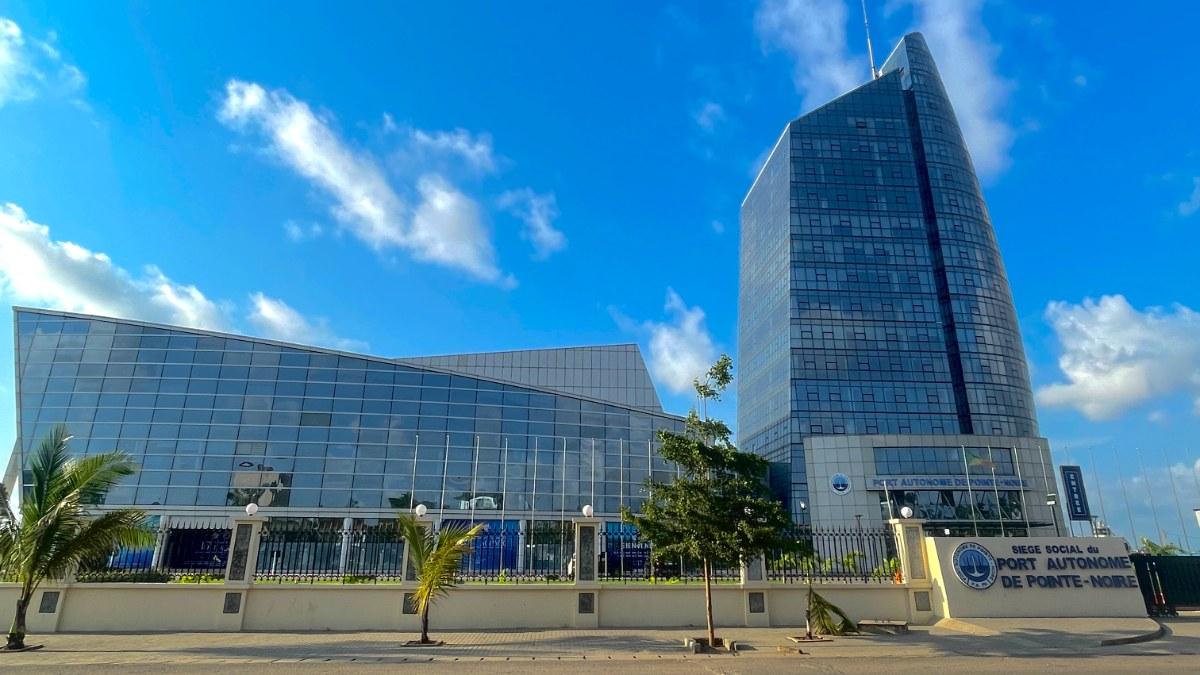
Cover photo: Pointe-Noire Port Authority (PAPN) headquarters – Madaraizen20, Wikimedia Commons, CC0.

By
Dexpell LogisticsInternational Logistics & Trade
Dexpell Logistics is an international freight forwarding company offering sea, air and road transport, project logistics and trade consulting across 90+ countries. The news, guides and analyses on this blog are produced by the Dexpell expert team.
Dexpell is here for your logistics needs
Sea, air, and road freight, project logistics, and trade consulting across 90+ countries.
