
Shipping from Turkey to Namibia: Walvis Bay FCL/LCL, air cargo to Windhoek, SACU customs and 15% VAT, transit to Zambia and Botswana, mining cargo quotes.
Last updated: 9 November 2026
How do you ship from Turkey to Namibia?
Shipping from Turkey to Namibia mostly moves by sea through Walvis Bay, Namibia's main container port, while urgent and lightweight cargo flies into Hosea Kutako International Airport near the capital, Windhoek. Full container load (FCL), less than container load (LCL), door-to-door delivery and project cargo such as mining equipment are all commercially realistic on this route. Freight cost depends on the origin city, container type, weight and volume, commodity, Incoterm and transhipment routing. Most sailings from Turkish ports to Walvis Bay involve at least one transhipment, so transit time depends on the connection plan rather than a single direct service. This guide explains what drives the price, how transit time works, which documents are needed and how to get a current quote.
What are the shipping options from Turkey to Namibia?
FCL container shipping (20ft and 40ft)
FCL is the most economical option for cargo going to a single consignee in a volume that fills a container. Building materials, ceramics, steel products, furniture and packaged food usually move in 20ft or 40ft dry containers: 20ft for heavy, dense cargo and 40ft or 40ft HC for bulky cargo.
LCL consolidated shipping
Cargo that does not fill a container is consolidated with other shipments and charged per cubic metre or per tonne, whichever is greater. For a relatively small market like Namibia, LCL usually runs through a regional hub rather than directly, so deconsolidation time at destination has to be planned in.
Air freight to Windhoek
Air freight suits samples, spare parts, urgent machine components and small high-value shipments. Turkish Airlines announced a weekly Istanbul–Johannesburg–Windhoek cargo service in December 2020, but later reports indicate it did not continue permanently. Today, air cargo to Windhoek is usually routed via transfer hubs such as Johannesburg, and capacity and routing should be confirmed for each shipment.
Project cargo, heavy lift and mining equipment
Namibia's mining sector (uranium, diamonds, gold and other metals) drives regular demand for earthmoving machinery, crushing and screening plants, pumps, steel structures and spare parts. Out-of-gauge cargo is planned with flat rack, open top or break-bulk solutions, combined with permitted abnormal-load road transport from the port to site.
Not sure which mode fits your cargo? Enter the commodity, weight and dimensions in our quote form and ask for a side-by-side comparison of FCL, LCL and air freight options.
Why is Walvis Bay Namibia's main trade gateway?
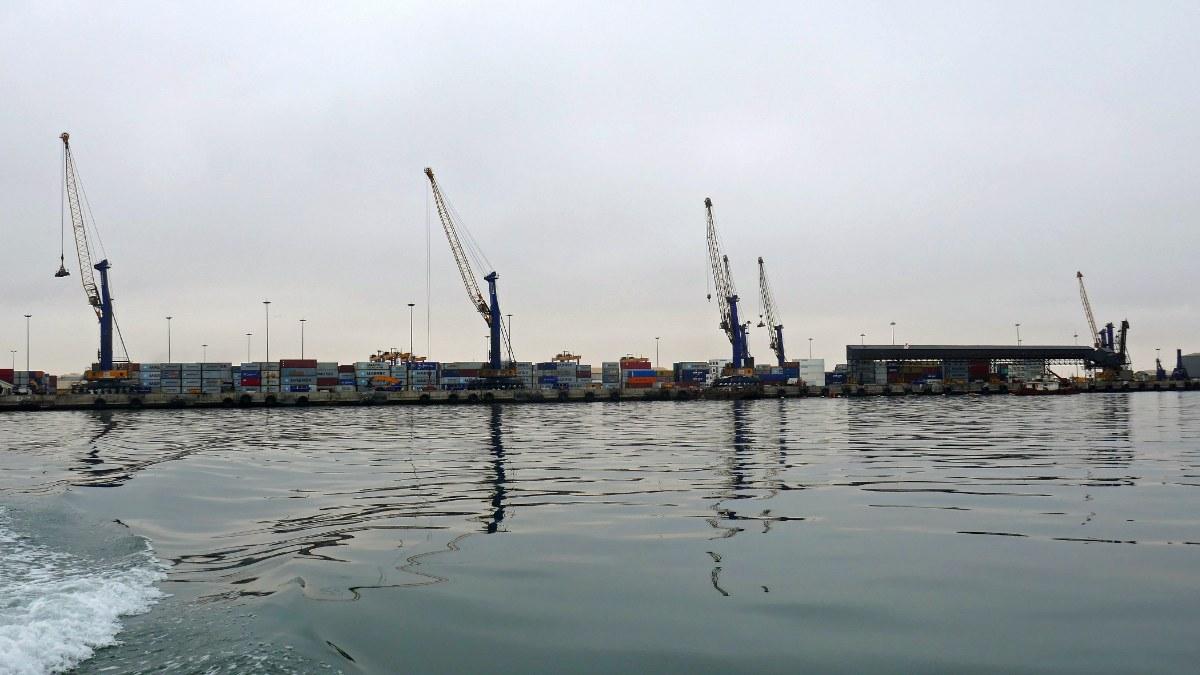
Walvis Bay is Namibia's deep-water port on the Atlantic coast and handles most of the country's container traffic. According to Germany Trade & Invest (GTAI), MSC has operated the Walvis Bay container terminal under a 25-year concession since October 2024, and trade press reports that MSC is giving Walvis Bay a larger transhipment role in its southern Africa network. Because this can change the connections available for Turkish cargo, the routing should be selected against current schedules for every quote.
The port of Lüderitz in the south is smaller and mainly serves regional and mining cargo. The main air gateway is Hosea Kutako International Airport (WDH), roughly 45 km east of Windhoek.
Walvis Bay corridors: transit to Zambia, Botswana and South Africa
Walvis Bay is a gateway not only to Namibia but also to landlocked neighbours. According to the Walvis Bay Corridor Group, the Walvis Bay–Ndola–Lubumbashi corridor stretches about 2,500 km and links the port with Zambia, southern DRC and Zimbabwe. The Trans-Kalahari Corridor runs through Botswana to Gaborone and South Africa's Gauteng province, and Botswana has a dry port inside the Port of Walvis Bay. For cargo from Turkey to Zambia or Botswana, these corridors offer an alternative to Durban and Dar es Salaam.
What determines Turkey–Namibia freight cost?
Freight rates change frequently with carrier tariffs, season and transhipment capacity, so quoting a fixed price would be misleading. The main cost drivers are:
Origin: loading from Istanbul (Ambarlı), Kocaeli, Izmir or Mersin, plus trucking from factory to port.
Container type and cargo size: 20ft, 40ft, 40ft HC, flat rack; chargeable volume or weight for LCL.
Commodity: dangerous goods (IMO), temperature-controlled or out-of-gauge cargo adds cost.
Incoterm: EXW, FOB, CFR, CIF, DAP or DDP determines who pays which charges.
Transhipment and surcharges: bunker (BAF), peak season, terminal handling (THC) and transhipment port charges.
Destination costs: Walvis Bay port charges, customs brokerage, import duties and VAT, and inland delivery to Windhoek or a mine site.
For air freight, the charge is based on the greater of actual weight and volumetric weight (typically cm³/6000).
How long does shipping from Turkey to Namibia take?
Because Turkey–Walvis Bay ocean shipments usually move through one or more transhipment ports, transit time varies with the carrier, the dwell time at the transhipment hub and the vessel schedule. We confirm the expected port-to-port time against current schedules with each quote. For door-to-door planning, add loading and export clearance in Turkey, discharge and customs clearance in Walvis Bay, and inland delivery. The Walvis Bay Corridor Group cites an average road transit of about four days from Walvis Bay to Lusaka, which should be added to the ocean leg for Zambian cargo.
Airport-to-airport air freight usually takes a few days depending on the connection, with extra time for customs and delivery.
To get the current freight rate and transit time for your own cargo, request a Turkey–Namibia freight quote.
What goods are shipped from Turkey to Namibia?
Shipping machinery and mining equipment from Turkey to Namibia
Mining and infrastructure projects keep demand steady for construction machinery, crushers, pumps, generators and steel structures. For these loads, dimensions, weights, lifting points and site access need to be defined early.
Building materials, ceramics and marble
Heavy cargo such as ceramic tiles, sanitaryware, rebar, profiles, paint and natural stone usually moves in 20ft containers, with container weight limits and port-side restrictions factored into planning.
Furniture, textiles and food products
Furniture and home textiles are bulky and often ship in 40ft HC containers, while packaged food (pasta, flour, confectionery, canned goods) moves in dry containers. For food, the destination's labelling and health-certificate requirements should be checked with the importer in advance.
Namibia customs rules and required documents
Namibia is a member of the Southern African Customs Union (SACU). According to Namibia's Ministry of Finance, goods from outside SACU, including Turkey, are subject to customs duty under the common external tariff, while goods from SACU members are duty-free. The standard VAT rate is 15%. According to PwC's tax summary, import VAT is charged on the greater of FOB value plus 10% or market value.
From 1 April 2026, the Namibia Revenue Agency (NamRA) requires a valid Trader Identification Number (TIN) for the importer, exporter and declarant on every customs declaration in ASYCUDAWorld. Making sure your buyer's TIN is in place is the first step to avoiding port delays. NamRA's eTariff portal can be used for tariff code and duty estimates; the exact duty depends on the product's HS classification.
Documents typically required for exports from Turkey to Namibia:
Commercial invoice and packing list
Bill of lading or air waybill
Turkish export declaration
Certificate of origin (if required by the buyer or letter of credit)
Product-specific documents: health/phytosanitary certificates for food, MSDS and IMO declaration for dangerous goods, ISPM 15 marking on wooden packaging
Product-specific import permits can change, so we recommend confirming them with your buyer's customs broker before shipping.
What does Dexpell handle on Turkey–Namibia shipments?
Dexpell manages origin pickup from your factory or warehouse in Turkey, export customs coordination, FCL/LCL and air freight booking, transhipment planning and destination-agent coordination in Walvis Bay in one file. On request, we arrange inland delivery to Windhoek or along the corridors towards Zambia and Botswana, cargo insurance and equipment planning for project cargo. As an IATA cargo agent in Turkey, we can book directly with airlines on the air freight side.
Get your Turkey–Namibia freight quote
Request current Turkey–Namibia freight rates. Share your origin city, destination (Walvis Bay, Windhoek or a transit country), commodity, gross weight, dimensions, container type and Incoterm: https://www.dexpell.com/en/quote
You can also send your freight request to info@dexpell.com.
Frequently Asked Questions
How much does container shipping from Turkey to Namibia cost?
The price depends on the loading port, container type, weight, transhipment routing and surcharges, and it is updated frequently. For an accurate figure you need a current quote based on your cargo details.
How long does sea freight from Turkey to Walvis Bay take?
Most shipments are transhipped, so transit time varies with the carrier and the dwell time at the hub. We provide an estimated time based on current schedules with each quote.
Can I ship a 20ft or 40ft container from Turkey to Namibia?
Yes, 20ft, 40ft and 40ft HC dry containers can be shipped. Flat rack or open top equipment can also be arranged for out-of-gauge cargo.
What are import duties and VAT in Namibia?
The standard VAT rate is 15%, while customs duty depends on the product's HS code under the SACU common external tariff. NamRA's eTariff portal or your buyer's customs broker can provide an estimate.
Is air freight available to Namibia?
Yes, air cargo can be sent to Windhoek's Hosea Kutako International Airport. Shipments are usually routed via transfer hubs such as Johannesburg.
Can cargo be shipped via Walvis Bay to Zambia or Botswana?
Yes, the Walvis Bay–Ndola–Lubumbashi and Trans-Kalahari corridors connect Walvis Bay with Zambia, southern DRC, Zimbabwe and Botswana. Transit declarations and inland transport planning are required.
Can Dexpell ship mining equipment from Turkey to Namibia?
Yes, we plan container, flat rack or break-bulk solutions and specialised delivery to site for machinery, crushers and spare parts. Dimensions and weights are essential for a quote.
Which documents are needed to export to Namibia?
The core documents are the commercial invoice, packing list, bill of lading or AWB and export declaration. The buyer's NamRA TIN and any product-specific certificates should also be ready in advance.
Related Services and Articles
Shipping from Turkey to Zambia: https://www.dexpell.com/en/media/blog/turkiyeden-zambiyaya-nakliye
Shipping from Turkey to South Africa: https://www.dexpell.com/en/media/blog/turkiyeden-guney-afrikaya-nakliye
Shipping from Turkey to Angola: https://www.dexpell.com/en/media/blog/turkiyeden-angolaya-nakliye
Shipping from Turkey to the DR Congo: https://www.dexpell.com/en/media/blog/turkiyeden-kongo-demokratik-cumhuriyetine-nakliye
Shipping from Turkey to Mozambique: https://www.dexpell.com/en/media/blog/turkiyeden-mozambike-nakliye
What is air freight?: https://www.dexpell.com/en/media/blog/hava-yolu-tasimaciligi-nedir-hava-lojistiginin-avantajlari-ve-sureci
Photo: "Walvis Bay-Port (4)" by Ji-Elle, Wikimedia Commons, licensed under CC BY-SA 4.0; cropped to 16:9.

By
Dexpell LogisticsInternational Logistics & Trade
Dexpell Logistics is an international freight forwarding company offering sea, air and road transport, project logistics and trade consulting across 90+ countries. The news, guides and analyses on this blog are produced by the Dexpell expert team.
Dexpell is here for your logistics needs
Sea, air, and road freight, project logistics, and trade consulting across 90+ countries.
