
Ocean and air freight options from Turkey to Nicaragua, the factors that determine freight cost, routing via Corinto Port and Managua Airport, the free trade zone (zona franca) textile raw material export opportunity, and required customs documents.
Shipping from Turkey to Nicaragua is handled mainly through transshipment ocean freight to Corinto, Nicaragua's main Pacific-coast container port, since no direct sailings exist from Turkey, and through air freight via Turkish Airlines' direct Istanbul-Panama City (Tocumen) service connecting onward to the capital Managua through Star Alliance partner Copa Airlines. Freight cost depends on cargo type, container size, weight/volume, the chosen Incoterm and the transshipment routing used. This guide covers the available transport options on the Turkey-Nicaragua route, realistic transit-time expectations, required documents and how to request an instant freight quote.
Shipping Options from Turkey to Nicaragua
Both FCL (full container load) and LCL (less than container load) services are available for shipments to Nicaragua. There is no direct sailing from Turkey to Corinto, Nicaragua's main container port; cargo is carried on the mainline services of carriers such as Maersk, MSC, CMA CGM and Ocean Network Express (ONE) to a regional transshipment hub, typically Cartagena in Colombia or Balboa in Panama, and then moved onward to Corinto by feeder vessel. For air freight, Turkish Airlines operates multiple direct passenger flights per week from Istanbul Airport to Tocumen International Airport in Panama City, and the belly-hold cargo capacity of these flights is used for commercial freight. Turkish Airlines' Star Alliance partner Copa Airlines uses Tocumen as its hub and operates regular service to Augusto C. Sandino International Airport (MGA) in Managua, forming a practical Panama-transit air cargo corridor. Project cargo and break-bulk solutions can also be arranged for urgent or oversized shipments.
Freight Cost Factors
Freight cost from Turkey to Nicaragua is determined by cargo type, the choice between a 20ft or 40ft container, gross/volumetric weight, the selected Incoterm (FOB, CFR, CIF, DDP, etc.), the transshipment port and carrier used, customs duties, and additional charges such as the bunker adjustment factor (BAF) and terminal handling fees. Ocean freight rates change weekly based on global container supply-demand balance and capacity on the transshipment route, so a current, binding figure can only be provided through a quote prepared from your shipment's specific details. Use the quote form below for up-to-date freight information.
Transit Time
Port-to-port transit time to Corinto depends on the transshipment hub used (Cartagena or Balboa) and the frequency of the onward feeder service; since no direct sailing exists, total transit time is typically longer than a single-transshipment route. Door-to-door delivery adds inland transportation and customs clearance days on top of this. For air freight, the Istanbul-Panama City flight takes roughly 15-16 hours, and the Panama City-Managua connecting flight adds a few more hours; total door-to-door air freight time depends on the connection schedule and the customs clearance process in Managua. Confirm the current sailing and flight schedule before shipping for an exact transit-time estimate.
Main Gateways
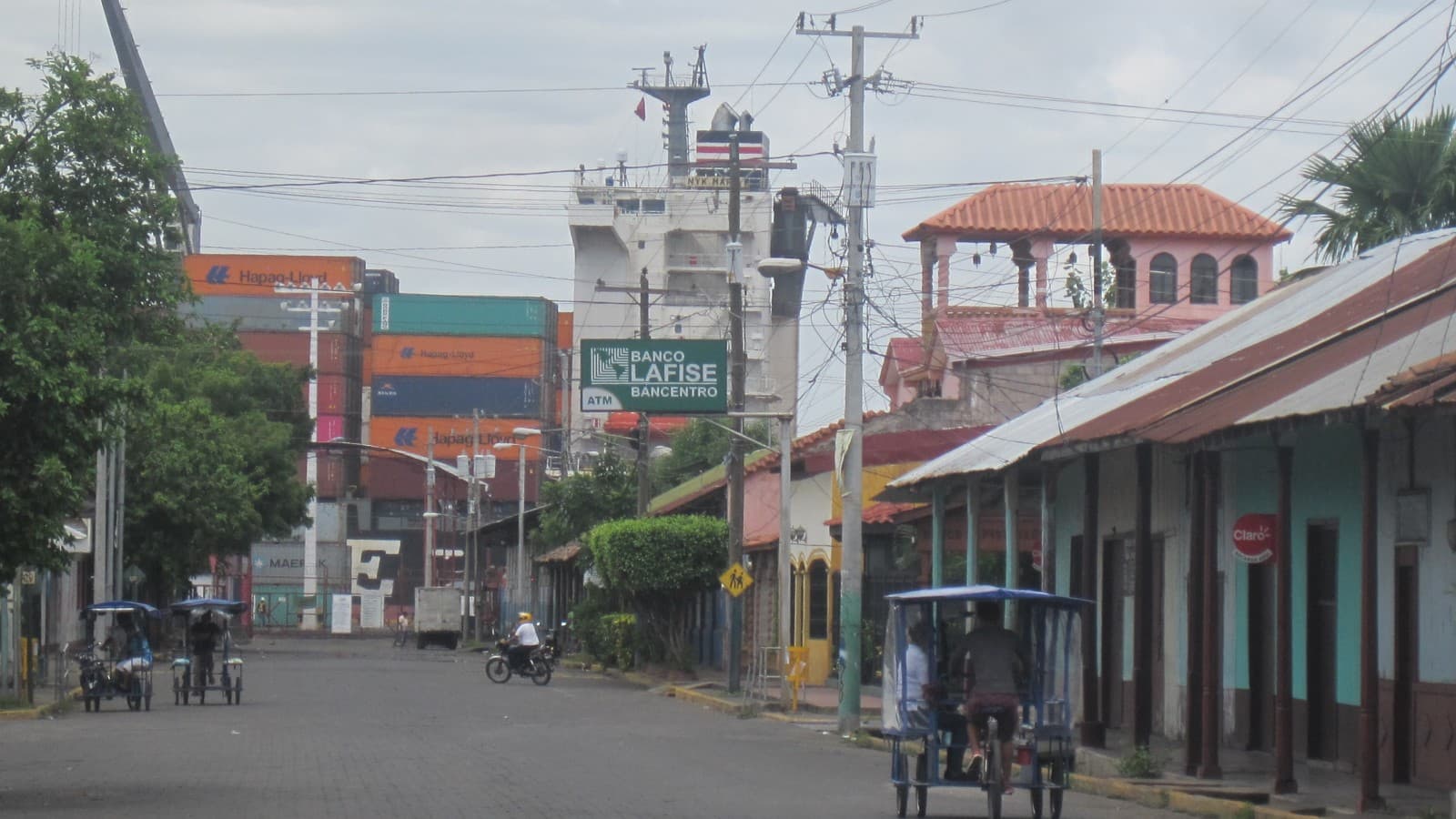
Corinto, on Nicaragua's Pacific coast, is the country's largest and most strategically important container port, handling the majority of imports and exports. On the Caribbean coast, smaller ports such as El Rama and Bluefields exist but handle limited container traffic. The main air cargo gateway is Augusto C. Sandino International Airport (MGA) in the capital, Managua, which also has cold-storage facilities for temperature-sensitive cargo.
Export Products and the Free Trade Zone (Zona Franca) Opportunity
Turkey's main export categories to Nicaragua include machinery and equipment, textile raw materials and fabric, automotive parts, furniture, construction materials and industrial products. Nicaragua's "zona franca" free-trade-zone regime is the backbone of the country's export economy, and most of the factories operating within it are garment and apparel manufacturers that import a significant share of the fabric and textile raw materials used in production. Turkey's strong textile and fabric manufacturing base represents a concrete trade opportunity for supplying raw materials to apparel producers in Nicaragua's zona franca zones. Cargo destined for the free trade zone can benefit from customs duty and VAT exemptions under the applicable regulations.
Required Documents and Customs Clearance
Standard export documentation to Nicaragua includes a commercial invoice, packing list, certificate of origin, and a Bill of Lading for ocean shipments or an Air Waybill for air shipments. The importer must be registered as a taxpayer with Nicaragua's customs authority (DGA - Dirección General de Servicios Aduaneros) and may need to present additional permits or certificates, such as a phytosanitary certificate, for regulated product categories like food and agricultural goods. Since Turkey is not party to a preferential trade agreement such as CAFTA-DR with Nicaragua, a standard non-preferential certificate of origin is sufficient.
Dexpell's Operational Support on the Nicaragua Route
Dexpell manages the full process from pickup at the factory or warehouse in Turkey, export customs declaration coordination, ocean and air freight booking, coordination with the destination agent in Nicaragua for import clearance, and door-to-door delivery. As a registered IATA cargo agent in Turkey, we negotiate directly with airlines to secure competitive cargo capacity and booking priority. Textile raw material shipments to zona franca zones, project cargo organization and cargo insurance for high-value shipments are also part of our service scope.
Get a Freight Quote for Nicaragua
To get current freight and transit-time information for your shipment from Turkey to Nicaragua, share your cargo details (origin city, product type, weight, dimensions, container type or air freight information, Incoterm and required delivery date) and request an instant quote: https://www.dexpell.com/en/quote
You can also send your freight request to info@dexpell.com.
Frequently Asked Questions
How long does shipping from Turkey to Nicaragua take?
Since there is no direct sailing, cargo moves through a regional transshipment hub such as Cartagena or Balboa before reaching Corinto by feeder vessel; total port-to-port time depends on the transshipment connection. Door-to-door delivery adds inland transportation and customs clearance days on top of this.
Which port is used to ship a container to Nicaragua?
The main destination is Corinto Port on the Pacific coast. Cargo transships at Cartagena in Colombia or Balboa in Panama before reaching Corinto by feeder vessel.
Is air freight available from Turkey to Nicaragua?
Yes. Turkish Airlines flies direct from Istanbul to Panama City (Tocumen), and Star Alliance partner Copa Airlines connects from Tocumen to Managua (MGA). Together this forms a Panama-transit air cargo corridor.
Can textile raw materials be shipped to Nicaragua's zona franca zones?
Yes, Dexpell can organize shipments of fabric and textile raw materials to apparel manufacturers operating in Nicaragua's free trade zones. Cargo destined for the free trade zone can benefit from tax exemptions under the applicable regulations.
Is DDP (Delivered Duty Paid) delivery available?
Yes, Dexpell arranges door-to-door transportation from the pickup point in Turkey to the final delivery address in Nicaragua, and this service can include the DDP option.
What products can be exported to Nicaragua?
Turkey's main export categories to Nicaragua are machinery and equipment, textile raw materials, automotive parts, furniture, construction materials and industrial products.
What documents does Nicaraguan customs require?
Standard requirements include a commercial invoice, packing list, certificate of origin and a Bill of Lading or Air Waybill. Additional certificates may be required for certain product categories, such as food and agricultural goods.
What is the cost difference between a 20ft and 40ft container?
Total freight cost increases with container size, but the cost per unit of cargo is generally more favorable in a 40ft container. The exact difference depends on cargo volume and current freight/transshipment conditions; request a quote for an up-to-date comparison.
How can I get a freight quote?
Share your origin point, product type, weight, dimensions, container or air freight preference and Incoterm, and request an instant quote at https://www.dexpell.com/en/quote or via info@dexpell.com.
Related Services and Articles
https://www.dexpell.com/en/media/blog/turkiyeden-panamaya-nakliye
https://www.dexpell.com/en/media/blog/turkiyeden-kosta-rikaya-nakliye
https://www.dexpell.com/en/media/blog/turkiyeden-hondurasa-nakliye
https://www.dexpell.com/en/media/blog/turkiyeden-guatemalaya-nakliye
https://www.dexpell.com/en/media/blog/turkiyeden-el-salvadora-nakliye
https://www.dexpell.com/en/media/blog/turkiyede-importer-of-record-hizmeti
https://www.dexpell.com/en/media/blog/mbl-vs-hbl
Cover photo: JaredGMP64 (Wikimedia Commons), used under the CC BY-SA 4.0 license.

By
Dexpell LogisticsInternational Logistics & Trade
Dexpell Logistics is an international freight forwarding company offering sea, air and road transport, project logistics and trade consulting across 90+ countries. The news, guides and analyses on this blog are produced by the Dexpell expert team.
Dexpell is here for your logistics needs
Sea, air, and road freight, project logistics, and trade consulting across 90+ countries.
