
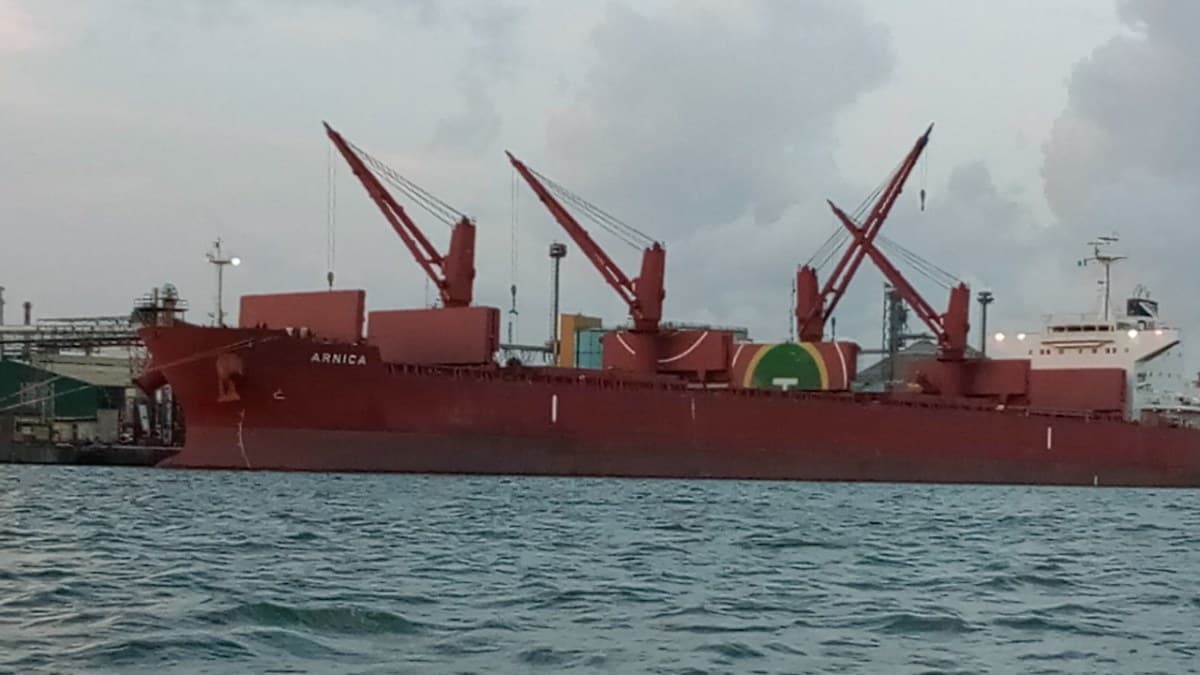
Turkey to Nigeria shipping guide: FCL/LCL containers to Lagos Apapa, Tin Can and Lekki, air freight to Lagos, Abuja and Kano, freight cost drivers, transit time, Form M, PAAR, SONCAP and Nigeria's 2026 import prohibition list.
Last Updated: October 12, 2026
How Do You Ship from Turkey to Nigeria? The Short Answer
Shipping from Turkey to Nigeria is done mainly by ocean freight, in FCL or LCL containers, to the Lagos ports (Apapa, Tin Can Island and Lekki Deep Sea Port), and by air freight from Istanbul to Lagos, Abuja and Kano for urgent or lighter shipments. Your freight cost depends on container type, cargo weight and volume, origin city, destination port, transshipment routing, Incoterm, and customs and inland haulage on the Nigerian side. What really makes the difference on this route is paperwork: Form M, the PAAR and, for many products, a SONCAP certificate should be in place before the cargo sails. This guide covers the options, the cost drivers, transit-time logic and the required documents, and ends with a way to request a current freight quote.
Which Shipping Options Are Available from Turkey to Nigeria?
FCL Container Shipping (20' / 40' / 40' HC)
Full container load (FCL) is the most economical option for machinery, building materials, furniture, home appliances and other bulky commercial cargo. Loading is usually from Ambarli, Mersin, Gemlik or Izmir (Aliaga/Nemrut). Transshipment services are common between Turkey and Lagos, with the container typically switching vessels at a Mediterranean hub before heading to West Africa. The carrier, hub and Lagos terminal are confirmed at quotation stage.
LCL Groupage
For a few pallets or a few cubic metres, LCL (less than container load) is the practical choice. Your cargo is consolidated with other exporters' goods at a warehouse in Istanbul or Mersin and deconsolidated in Lagos. In LCL, every consignee's Form M and PAAR must be complete, because one consignee's missing paperwork can delay unstuffing and delivery for the whole box.
Air Freight
Air freight suits spare parts, samples, electronic components and urgent machine parts. Turkish Cargo has long operated freighter services to Lagos and Kano, and Turkish Airlines' passenger flights to Lagos, Abuja, Kano and Port Harcourt have offered belly-hold capacity. Frequencies and aircraft types change by season, so we confirm capacity at the time of booking.
Door-to-Door, DAP and DDP
Pickup from your factory, Turkish export customs, ocean or air freight, Lagos arrival handling and delivery to the consignee can be managed as a single file. Under DAP the consignee pays the import duties; DDP requests are assessed shipment by shipment because of Nigerian importer registration, Form M and tax obligations. Project cargo and out-of-gauge equipment are planned separately on flat rack, open top or break-bulk.
If you'd like to know which mode makes sense for your cargo, just share the commodity, weight and dimensions: https://www.dexpell.com/en/quote
How Much Does Shipping from Turkey to Nigeria Cost?
Turkey–Nigeria freight rates change frequently with carrier, season and equipment availability, so quoting a fixed price here would be misleading. The main cost drivers are: origin city and haulage to port; container type (20', 40', 40' HC, reefer, flat rack); gross weight and volume (in LCL, per CBM or tonne, whichever is greater; in air freight, the greater of actual and volumetric weight); destination terminal (Apapa, Tin Can, Lekki or Onne); transshipment routing; surcharges such as BAF and peak-season charges; terminal and port charges in Lagos; container return and demurrage/detention; import duties; and inland trucking.
The Incoterm decides who pays for what: under EXW and FCA the buyer pays the main freight, under CFR/CIF the Turkish exporter covers freight (and insurance under CIF), and under DAP and DDP the seller organises delivery to the agreed point. Because port dwell costs in Nigeria can be significant, completing documents before arrival directly lowers your total landed cost.
How Long Does Shipping from Turkey to Nigeria Take?
Port-to-port ocean transit depends on the carrier, waiting time at the transshipment hub and berthing congestion in Lagos. A direct Turkey–Lagos service is not always available, and transshipment routings can take longer. Door-to-door time also includes Turkish export clearance, discharge in Lagos, PAAR-based customs examination and inland delivery. Airport-to-airport air freight usually takes a few days, but Nigerian clearance and delivery are what really drive the total.
The most common causes of delay are a missing or incorrect Form M or PAAR, a SONCAP certificate not obtained before arrival, mismatches in declared value or HS code, and port congestion. We give a firm schedule once the loading week is known, based on the current sailing plan.
To see current sailing options and an estimated door-to-door time for your shipment, send us your freight request: https://www.dexpell.com/en/quote
Main Ports and Airports in Nigeria
Apapa (Lagos): Nigeria's historic main container port, close to Lagos and the southwest market. Tin Can Island (Lagos): next to Apapa, with heavy container and Ro-Ro traffic. Lekki Deep Sea Port (Lagos): a deep-water port that opened in 2023; according to Nigerian Ports Authority (NPA) figures reported in local media, it now handles a major share of the country's cargo throughput, with several main-line carriers calling directly. Onne (Rivers State): close to Port Harcourt and the oil and gas industrial zone, the preferred port for eastern Nigeria.
The main air cargo gateways are Lagos Murtala Muhammed (LOS), Abuja Nnamdi Azikiwe (ABV), Kano Mallam Aminu Kano (KAN) and Port Harcourt (PHC). For consignees in the northern Kano market, air freight or road haulage from Lagos are assessed separately.
What Do Turkish Exporters Ship to Nigeria?
According to figures reported by Anadolu Agency, Turkey's exports to Africa rose markedly year on year in the first seven months of 2026, with Nigeria among the markets showing strong growth. Commercially relevant cargo groups on this route include:
Machinery and equipment: food processing, packaging, plastics and flour/pasta production lines; generators and spare parts.
Building materials: ceramics, sanitaryware, fittings, profiles and hardware (some steel products and bagged cement are on the import prohibition list).
Furniture and home textiles: office and home furniture, carpets, curtains.
Automotive spare parts and home appliances.
Packaging and industrial products.
Shipping Machinery from Turkey to Nigeria
For machinery, dimensions and weight decide the equipment: standard-size machines fit in a 40' HC, out-of-gauge units go on flat rack or open top, and very large pieces move as break-bulk. A lashing and securing plan, moisture-protective packing and loading photos also help during examination in Lagos. SONCAP coverage and the HS code should be confirmed in advance for machinery too.
Documents and Customs for Exporting to Nigeria
Nigeria is a market where paperwork has to be ready before the cargo leaves. The core documents are the commercial invoice, packing list, bill of lading (B/L) or air waybill (AWB), certificate of origin and the Turkish export declaration. On the Nigerian side you will also need:
Form M: a mandatory import declaration opened electronically by the importer through a Central Bank of Nigeria (CBN) authorised dealer bank, before shipment. The proforma invoice must match the Form M exactly.
PAAR (Pre-Arrival Assessment Report): generated by the Nigeria Customs Service (NCS) from the final documents and used as the basis for duty assessment; if it is not ready before arrival, the cargo risks being held at port.
SONCAP: the Standards Organisation of Nigeria (SON) conformity programme. Regulated products need a product certificate plus a SONCAP certificate for each shipment.
Sector permits: food, pharmaceuticals, cosmetics and chemicals may need NAFDAC approval, and some products NESREA permits.
According to industry sources, since 27 March 2026 SON import permits and related applications are processed through Nigeria's National Single Window. The import prohibition list updated in April 2026 covers non-ECOWAS-origin items such as refined vegetable oils, sugar, poultry and meat products, bagged cement, certain steel products, corrugated cartons, soaps and detergents, ballpoint pens and certain medicines. Collection of the planned 4% FOB import charge was suspended by the Ministry of Finance. Since these rules change often, we confirm your HS code and the product's current status with your consignee and our customs broker before loading.
What Does Dexpell Do on Turkey–Nigeria Shipments?
Dexpell picks up cargo anywhere in Turkey, coordinates export customs, and books FCL/LCL ocean freight and air freight. As an IATA cargo agent in Turkey, we book directly with airlines and negotiate competitive rates. Before loading we check that the proforma, Form M and SONCAP details match; in Lagos we coordinate discharge, customs clearance and delivery to the consignee with our destination agent. Cargo insurance, project cargo planning and container tracking are part of the service.
Get Your Turkey–Nigeria Freight Quote
Calculate your freight cost now. In the quote form, include: origin city, destination city/port (Lagos, Onne, Abuja, Kano), commodity and HS code, gross weight, dimensions or volume, number of cartons/pallets, container type (for FCL), Incoterm and ready date. Request your Turkey–Nigeria shipping quote here: https://www.dexpell.com/en/quote
You can also send your freight request to info@dexpell.com.
Frequently Asked Questions
How much does it cost to ship a container from Turkey to Nigeria?
The price depends on container type, origin and destination port, carrier and transshipment routing, seasonal surcharges and Lagos port charges. Because rates are updated often, we give a current price based on your cargo details via the quote form.
How long does ocean freight from Turkey to Lagos take?
It depends on whether the service is direct or via transshipment, waiting time at the hub and berthing congestion in Lagos. We share a firm transit time once the loading week is known, based on the current sailing schedule.
Which Nigerian port should I ship to: Apapa, Tin Can or Lekki?
The destination terminal is usually determined by the carrier chosen; the consignee's warehouse location and their customs broker's terminal also matter. For consignees in eastern Nigeria, Onne may be the better option.
What is Form M and who opens it?
Form M is a mandatory import document opened electronically by the Nigerian importer through their authorised bank. The Turkish exporter's job is to make sure the proforma invoice matches the Form M exactly.
Is a SONCAP certificate required for every product?
No, only for products regulated by SON, which is determined by HS code. Food, pharmaceuticals and cosmetics fall under NAFDAC and need different approvals.
Can I send air freight from Turkey to Nigeria?
Yes. Air freight can be arranged from Istanbul to Lagos, Abuja, Kano and Port Harcourt; space and frequency are confirmed at booking.
Can Dexpell deliver door to door in Nigeria?
Yes, we coordinate discharge, customs clearance and delivery to the consignee through our destination agent. DDP requests are assessed per shipment because of importer registration and tax obligations.
Which goods are banned from import into Nigeria?
The list updated in April 2026 includes refined vegetable oils, sugar, poultry and meat products, bagged cement, certain steel products, carton packaging, soaps and detergents and certain medicines. We check your product's status by HS code before loading.
Related Articles
Shipping from Turkey to Egypt: https://www.dexpell.com/en/media/blog/turkiyeden-misira-nakliye
Shipping from Turkey to Morocco: https://www.dexpell.com/en/media/blog/turkiyeden-fasa-nakliye
Shipping from Turkey to Algeria: https://www.dexpell.com/en/media/blog/turkiyeden-cezayire-nakliye
Shipping from Turkey to Tunisia: https://www.dexpell.com/en/media/blog/turkiyeden-tunusa-nakliye
Shipping from Turkey to Tanzania: https://www.dexpell.com/en/media/blog/turkiyeden-tanzanyaya-nakliye
Shipping from Turkey to Libya: https://www.dexpell.com/en/media/blog/turkiyeden-libyaya-nakliye
MBL vs HBL explained: https://www.dexpell.com/en/media/blog/mbl-vs-hbl
Photo: Apapa port, Lagos – Quadrex24, Wikimedia Commons, CC BY-SA 4.0 (File:Apapa port.lagos.jpg).

By
Dexpell LogisticsInternational Logistics & Trade
Dexpell Logistics is an international freight forwarding company offering sea, air and road transport, project logistics and trade consulting across 90+ countries. The news, guides and analyses on this blog are produced by the Dexpell expert team.
Dexpell is here for your logistics needs
Sea, air, and road freight, project logistics, and trade consulting across 90+ countries.
