
Shipping from Turkey to Saudi Arabia in 2026: road freight via the Syria–Jordan corridor, FCL/LCL containers to Jeddah, air cargo to Riyadh, Jeddah and Dammam, the Hormuz constraint, SABER certificates, 5% duty and 15% VAT. Learn what drives freight cost and get a current quote.
Last Updated: 3 October 2026 — Operating conditions in the Red Sea, the Strait of Hormuz and the Syria–Jordan land corridor can change week to week; route information in this guide was checked as of this date.
How Do You Ship from Turkey to Saudi Arabia?
Shipping from Turkey to Saudi Arabia today runs on three main options: road freight by truck through Syria and Jordan, ocean freight in FCL or LCL containers via the Suez Canal to the port of Jeddah, and air cargo from Istanbul to Riyadh, Jeddah and Dammam. Freight cost depends on cargo type, weight and volume, origin city, destination city, container type, Incoterm and the customs/SABER process. This guide explains which mode fits which cargo, what drives transit time, which SABER and customs documents you need, and how to get a current freight quote.
The key difference in 2026: with the Strait of Hormuz effectively closed to commercial traffic as of late September, sea access to Gulf-coast ports such as Dammam and Jubail is severely restricted. For cargo bound for eastern Saudi Arabia, Jeddah plus an inland road leg, or direct road freight from Turkey, are currently the most realistic options.
What Shipping Options Exist Between Turkey and Saudi Arabia?
Road Freight by Truck (Syria–Jordan Corridor)
The Turkey–Syria–Jordan–Saudi Arabia transit corridor is operating again. According to Syria's state news agency SANA, daily truck crossings on this route rose from 10 to 30, with a near-term target of 100. Following an April 2026 understanding with Saudi Arabia, a 15-day transit visa for Turkish truck drivers was introduced. Practical note: more than 300 Turkish trucks were held outside the border after departing without a Saudi transit visa obtained in Turkey — so driver visas and vehicle documents must be completed before loading.
The typical routing enters Syria via Cilvegözü or Öncüpınar, crosses into Jordan at Nasib/Jaber, and enters the Kingdom at the Jordan–Saudi border. Road freight offers a door-to-door speed advantage for full (FTL) or groupage loads of furniture, building materials, food, textiles and machinery, but border congestion and document checks directly affect timing. For regulatory detail on the Syrian leg, see our Syria Road Freight 2026 guide.
Ocean Freight: FCL and LCL Containers (Jeddah-Focused)
Containers loaded at Mersin, Iskenderun, Ambarlı or Aliağa transit the Suez Canal to Jeddah Islamic Port or King Abdullah Port on the Red Sea. CMA CGM, Maersk, MSC, Hapag-Lloyd and COSCO have returned to Suez routings to varying degrees, while carriers note that future routing depends on stability in the Red Sea. Jeddah is open and working, but congested: on 16 September Hapag-Lloyd reported the Jeddah container yard at around 73% density, close to its 76% capacity reference. That can mean extra waiting for container release and inland trucking.
20ft and 40ft FCL containers are the most cost-efficient option per unit for bulky and heavy cargo such as marble, ceramics, steel products and machinery. Cargo that does not fill a container moves as LCL (groupage); because LCL cargo is devanned at a consolidation warehouse on arrival, allow for additional handling time.
Ro-Ro Connections
Ro-Ro links on the Mersin–Egypt–Duba (Saudi Arabia's north-west Red Sea coast) corridor have been used in the past. Because frequency and capacity on such sailings vary, we confirm the Ro-Ro option separately against your loading date.
Air Cargo: Istanbul to Riyadh, Jeddah and Dammam
Turkish Cargo and Turkish Airlines offer freighter and passenger-belly capacity to Riyadh (RUH), Jeddah (JED) and Dammam (DMM), and Saudia Cargo is also active on the lane. Air cargo suits samples, spare parts, urgent production materials, high-value electronics and fashion. For small parcels and documents, our Turkey to Saudi Arabia courier and express shipping guide is a better starting point. Dexpell's IATA cargo agent status in Turkey is the operational reason we can book directly with airlines and negotiate preferential rates.
How Is the Cost of Shipping from Turkey to Saudi Arabia Calculated?
Freight rates change frequently with carrier capacity, Red Sea risk premiums and seasonality, so we do not quote a fixed price here; instead, these are the components that set the price:
Transport mode: per truck or per m³/weight for groupage on road; per container (FCL) or per m³/ton (LCL) on ocean; chargeable weight (the greater of actual and volumetric weight) on air.
Origin and destination: loading in Istanbul, Bursa, Kayseri or Gaziantep and delivering to Jeddah, Riyadh, Dammam or a project site determines inland costs. The road distance between Jeddah and Riyadh is roughly 950 km.
Surcharges: fuel (BAF), war/security risk surcharges, port and terminal handling, demurrage/detention, border waiting and transit fees.
Incoterm: EXW, FCA, FOB, CFR/CIF, DAP or DDP — who bears which cost changes the quote directly.
Customs duty and VAT: Saudi Arabia applies the Gulf Cooperation Council (GCC) common external tariff; for most goods customs duty is 5% of CIF value (some products carry higher rates). Import VAT of 15% is charged on CIF value plus duty.
Conformity costs: SABER product and shipment certificates, testing and conformity assessment body fees.
To compare road, ocean and air side by side for your own cargo, get a current quote at https://www.dexpell.com/en/quote.
What Determines Turkey–Saudi Arabia Transit Time?
Quoting an exact number of days would be misleading, because timing now depends more on borders, ports and documents than on distance. For realistic planning, separate the legs:
Road (door-to-door): usually faster than ocean; the deciding factors are congestion at the Syrian and Jordanian border crossings, the driver's transit visa and vehicle documentation.
Ocean (port-to-port plus inland): transit from Turkish ports via Suez to Jeddah varies by the carrier's service (direct or transshipment). Yard congestion in Jeddah can delay container release, and delivery to Riyadh or the Eastern Province adds an inland leg.
Air (airport-to-airport): the fastest option; door-to-door timing adds Turkish export customs and FASAH/SABER processing on the Saudi side.
The most common causes of delay: a missing SABER shipment certificate, a mismatch between the HS code on the invoice and the product description, a missing certificate of origin, and holiday or peak-season congestion.
What Are the Main Trade Gateways in Saudi Arabia?
Jeddah Islamic Port: the main Red Sea container port and hub for the Western Region, Makkah and Madinah.
King Abdullah Port: an alternative Red Sea container port north of Jeddah.
King Abdulaziz Port (Dammam) and Jubail: the Eastern Province's main ports; sea access is currently limited by the Hormuz constraint, so cargo for this region should be planned with a land connection.
Riyadh: the capital and largest consumer market; King Khalid International Airport (RUH) for air cargo, and road or inland trucking from Jeddah for ocean cargo.
Which Products Are Exported from Turkey to Saudi Arabia?
According to Turkey's Ministry of Trade, bilateral trade has exceeded USD 8.6 billion, with targets of USD 10 billion in the short term and USD 30 billion in the long term. Turkish exports to Saudi Arabia grew 52% in 2024, and food exports reached USD 461 million. In June 2026 the two countries' transport ministers signed a memorandum of understanding on rail and logistics. The cargo groups we see most often:
Furniture and Home Textiles
Furniture for hotel, residential and office projects is usually bulky but light; a 40ft HC container or a full truck is the most efficient option. Flat-packed shipments cut volume significantly.
Building Materials, Marble and Ceramics
The Kingdom's large-scale infrastructure and urban development projects keep demand strong in this category. Marble and ceramics are heavy, so the container's weight limit is reached before its volume; correct stowage and securing are critical.
Machinery, Spare Parts and Industrial Equipment
Machinery shipments may require flat rack, open top or project cargo solutions. Many electrical and mechanical products fall under SABER, so the conformity certificate process should start before production is finished.
Food Products
Dry food, confectionery, pasta and grain products move by sea or road; fresh and chilled goods move by reefer truck. For food, Saudi Food and Drug Authority (SFDA) registration and labelling requirements must also be checked.
Which Documents Are Required to Export to Saudi Arabia?
Commercial invoice and packing list: must show HS code, product description, origin, unit price and gross/net weight in full.
Certificate of origin: evidences Turkish origin; certification requirements can vary by buyer and product.
Bill of lading (B/L), air waybill (AWB) or CMR for road: for the MBL/HBL difference in ocean freight, see our MBL vs HBL guide.
SABER certificates: issued on the SABER platform run by SASO. Regulated products need a Product Certificate of Conformity (PCoC), and every shipment needs a Shipment Certificate of Conformity (SCoC). Since 1 October 2025, goods cannot be imported without a shipment certificate in SABER. From 18 June 2026, products listed in Appendix 1 of the relevant SASO circular also require a Product Declaration approved by the Ministry of Industry and Mineral Resources (MIMR) before an SCoC can be issued.
Product-specific documents: SFDA registration for food and cosmetics, MSDS/SDS and additional permits for some chemicals.
Saudi customs declarations are filed through ZATCA's FASAH system, which calculates duty and VAT from the declared HS code, value and country of origin. That is why a correct HS code on the invoice is critical for both duty and SABER matching.
What Does Dexpell Handle on Saudi Arabia Shipments?
Pickup anywhere in Turkey, export customs and document checks.
Vehicle, driver-visa and transit-document coordination for the Syria–Jordan road corridor.
FCL and LCL bookings from Turkish ports to Jeddah and King Abdullah Port; while Hormuz remains restricted, Jeddah plus inland trucking planning for the Eastern Province.
Air cargo bookings to Riyadh, Jeddah and Dammam as an IATA agent.
Document coordination with the buyer and the conformity assessment body during SABER; destination customs clearance and door delivery (DAP/DDP).
Project cargo, heavy and out-of-gauge planning, cargo insurance and shipment tracking.
For route alternatives across the Gulf, see also Alternative shipping routes from Turkey to the Gulf.
Get Your Turkey–Saudi Arabia Freight Quote
Road, container or air cargo — let us find the fastest and most economical option for your cargo. Include the following in your quote request: origin city, destination city (Jeddah, Riyadh, Dammam or project site), product description and HS code, gross weight, dimensions or volume, container type (if applicable), Incoterm and cargo ready date.
Request your Turkey–Saudi Arabia freight quote now: https://www.dexpell.com/en/quote
You can also send your freight request to info@dexpell.com.
Frequently Asked Questions
How much does shipping from Turkey to Saudi Arabia cost?
The price depends on transport mode, cargo weight and volume, origin and destination city, container type, Incoterm and current surcharges. Because Red Sea risk premiums and capacity make rates change frequently, the most accurate figure is a current quote based on your cargo details.
Can cargo be trucked from Turkey to Saudi Arabia?
Yes. The Turkey–Syria–Jordan–Saudi Arabia land corridor is active again in 2026 and daily crossings are rising. Drivers must obtain a Saudi transit visa before departure; otherwise trucks can be held at the border.
Which port does ocean freight from Turkey to Saudi Arabia use?
The main discharge port today is Jeddah Islamic Port on the Red Sea, with King Abdullah Port as an alternative. Because the Hormuz constraint limits sea access to Dammam and Jubail, Eastern Province cargo is usually planned via Jeddah with a land connection.
Are there delays at Jeddah port?
The port is open and operating, but in September 2026 container yard density approached its capacity reference. This can add time to container release and inland transport, so allow a buffer when planning delivery dates.
What is a SABER certificate and is it needed for every shipment?
SABER is the electronic platform through which the Saudi standards body SASO manages product conformity. Since 1 October 2025, imports are not possible without a shipment certificate (SCoC) in SABER, and regulated products also need a product certificate (PCoC).
What are customs duty and VAT in Saudi Arabia?
Saudi Arabia applies the GCC common external tariff; for most goods duty is 5% of CIF value, with higher rates on some products. Import VAT of 15% is charged on CIF value plus duty.
Is air cargo available from Turkey to Saudi Arabia?
Yes. Turkish Cargo and Turkish Airlines offer capacity to Riyadh, Jeddah and Dammam, and Saudia Cargo is also active on the lane. It is the fastest option for urgent, high-value and low-volume cargo.
Can Dexpell arrange DDP or door delivery to Saudi Arabia?
Yes. We manage the process from pickup and export customs in Turkey through transport, destination clearance and door delivery under DAP and DDP terms. Under DDP, duty and VAT calculation starts with the correct HS code and SABER documentation.
What should I watch when shipping furniture or machinery?
Volume drives cost for furniture, while weight and dimensions drive it for machinery; choosing the right container or vehicle type reduces cost significantly. For machinery and electrical goods, starting SABER certification during production avoids delays.
Related Services and Articles
Road Freight: https://www.dexpell.com/en/services/road-freight
Sea Freight: https://www.dexpell.com/en/services/sea-freight
Air Freight: https://www.dexpell.com/en/services/air-freight
https://www.dexpell.com/en/media/blog/turkey-to-saudi-arabia-courier-express-shipping
https://www.dexpell.com/en/media/blog/alternative-shipping-routes-turkey-to-gulf
https://www.dexpell.com/en/media/blog/turkey-to-uae-alternative-shipping-options
https://www.dexpell.com/en/media/blog/turkey-to-iraq-alternative-shipping-options
https://www.dexpell.com/en/media/blog/suriye-karayolu-tasimaciligi-2026
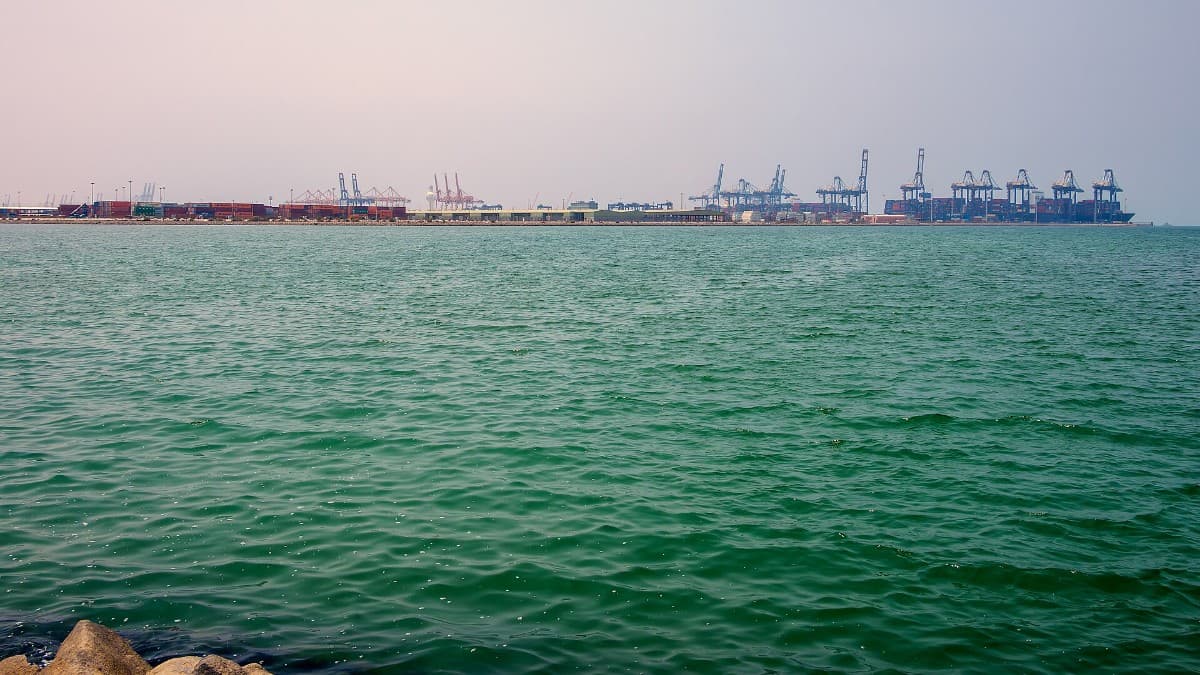
Cover photo: Jeddah Islamic Port — Meshari Alawfi, Wikimedia Commons, licensed under CC BY 4.0 (cropped).

By
Dexpell LogisticsInternational Logistics & Trade
Dexpell Logistics is an international freight forwarding company offering sea, air and road transport, project logistics and trade consulting across 90+ countries. The news, guides and analyses on this blog are produced by the Dexpell expert team.
Dexpell is here for your logistics needs
Sea, air, and road freight, project logistics, and trade consulting across 90+ countries.
