
Shipping from Turkey to Oman: FCL/LCL ocean freight to Sohar, Salalah and Duqm outside Hormuz, Istanbul–Muscat air freight and TIR via Saudi Arabia. Freight cost factors, transit time, Bayan customs documents and quotes.
Last Updated: October 4, 2026 — Strait of Hormuz and Red Sea conditions change week to week, so the routing information in this guide is reviewed regularly.
How Do You Ship from Turkey to Oman?
There are three practical ways to ship from Turkey to Oman: ocean freight (FCL or LCL containers) to the ports of Sohar, Salalah or Duqm; air freight to Muscat International Airport (MCT); and transit road freight (TIR) via Saudi Arabia. Freight cost depends on cargo weight and volume, container type, origin city in Turkey, destination port or city in Oman, the Incoterm, customs and inland delivery. Transit time depends on the mode and, in 2026, heavily on routing changes driven by the Strait of Hormuz and Red Sea situation. This guide covers what an exporter needs to know before requesting a Turkey–Oman freight quote: cost logic, transit time, customs documents and delivery points.
Why Has Oman Become a Key Gulf Gateway in 2026?
The Strait of Hormuz has been effectively closed to commercial traffic since February 28, 2026, and as of late September 2026 commercial transits remain far below pre-crisis levels. Oman's three main ports stand out in this situation: Sohar sits on the Gulf of Oman outside the Strait of Hormuz, while Salalah and Duqm face the Arabian Sea. As a result, Sohar, Salalah and Duqm have become the region's main ports located outside both the Hormuz and Bab el-Mandeb threat zones, absorbing transshipment and logistics flows.
Sohar illustrates the shift: Sohar Port and Freezone handled around 545,000 TEU in the first half of 2026, up 40% year on year. At the same time, strikes on Duqm and Salalah in March 2026 caused a five-day suspension of terminal operations at Salalah. Omani ports work as alternative gateways, but capacity, congestion and security conditions must be monitored closely. For the wider picture, see our guide to alternative shipping routes from Turkey to the Gulf.
What Shipping Options Exist Between Turkey and Oman?
Ocean Freight: FCL and LCL Containers
Ocean freight is the main option for heavy and high-volume export cargo. Containers loaded at Mersin, Iskenderun, Ambarli and other Turkish ports reach Sohar, Salalah or Duqm depending on the carrier service and transshipment structure. FCL (20' DC, 40' DC, 40' HC) suits full loads, while LCL consolidation suits smaller palletized shipments. Because security pressure in the Red Sea and Bab el-Mandeb continues, some services may route around the Cape of Good Hope or change their transshipment hub, so routing and transshipment points should be confirmed with every booking.
Air Freight: Istanbul to Muscat
Air freight is the fastest option for urgent, high-value or low-volume cargo. Turkish Airlines operates a daily Istanbul–Muscat passenger service whose belly capacity can be used for cargo, and Turkish Cargo has added Muscat to its A330-200F freighter network. Freighter frequencies and rotations change seasonally, so we confirm current capacity at the time of booking. As an IATA cargo agent in Turkey, Dexpell books directly with airlines, which is the operational reason it can access preferential air freight rates.
Road Freight: Transit TIR via Saudi Arabia
The road corridor from Turkey to the Gulf via Syria and Jordan into Saudi Arabia is in use again, and Saudi Arabia's 15-day transit visas for TIR drivers have made it faster. A truck heading to Oman continues from Saudi Arabia either via the Empty Quarter (Rub' al-Khali) road link or via the UAE. Road freight to Oman is a long-distance, case-by-case operation: transit documents, border conditions and vehicle permits must be assessed for every shipment. For the Saudi leg, see our Turkey to Saudi Arabia shipping guide.
Door-to-Door and DAP/DDP Options
Dexpell collects cargo from the factory or warehouse in Turkey, completes export customs, books the main carriage and coordinates import clearance and final delivery through its agent network in Oman. Delivery terms follow the Incoterm: EXW, FCA, FOB, CIF, DAP or, where suitable, DDP. Because of Oman's importer registration requirements (see the customs section below), DDP solutions are assessed based on the consignee's status.
Not sure which mode fits your cargo? Share your shipment details and we will compare ocean, air and road options for you: https://www.dexpell.com/en/quote
How Is the Cost of Shipping from Turkey to Oman Calculated?
Freight rates to Oman are not fixed; in 2026 the Hormuz crisis and Red Sea conditions mean freight and surcharges are updated frequently. Rather than quote an estimate, here are the factors that determine the price:
Transport mode: Ocean freight is the most economical per ton or cubic meter; air freight is chosen for speed; road freight for door-to-door control in specific cases.
Chargeable weight: In air freight, the greater of actual gross weight and volumetric weight (typically cm³/6000) is charged; LCL is charged on a weight/measure (W/M) basis.
Container type: 20', 40' or 40' HC; special equipment (open top, flat rack) costs more.
Destination port and inland delivery: Choosing Sohar, Salalah or Duqm, and trucking to Muscat, the Sohar industrial area or the Salalah free zone, changes the total cost.
Surcharges: Bunker (BAF), war-risk/emergency surcharges, terminal handling (THC), security fees and bill of lading charges.
Incoterm: Determines which costs stay with the seller, from EXW to DDP.
Import taxes: Oman applies the GCC Common External Tariff with a general 5% customs duty plus 5% VAT; exemptions or different rates may apply by product.
How Long Does Shipping from Turkey to Oman Take?
Think about transit time in three parts: port-to-port or airport-to-airport time, export and import clearance, and final delivery. In air freight, the direct Istanbul–Muscat flight keeps airport-to-airport time short, with customs clearance and space availability being the deciding factors. In ocean freight, timing varies significantly depending on whether the service runs via Suez and the Red Sea or around the Cape of Good Hope, the transshipment port, and congestion at Omani ports. For road freight, border crossings and transit permits drive the timeline. We provide the precise, current transit time with your quote, based on your shipment date and route.
Get current freight rates and transit time for your cargo: share your origin city, destination, commodity, weight and dimensions, and we will prepare an ocean vs. air comparison: https://www.dexpell.com/en/quote
Main Ports, Airports and Delivery Points in Oman
Sohar Port and Freezone: Northwest of Muscat on the Gulf of Oman; the main gateway for industrial and container cargo.
Port of Salalah: In the southern Dhofar region on the Arabian Sea; a major transshipment port next to the Salalah Free Zone.
Port of Duqm: On the central coast, developing alongside the Special Economic Zone at Duqm as an industrial and project-cargo port.
Muscat International Airport (MCT): The main entry point for air cargo.
Muscat and the Rusayl / Misfah industrial areas: Common commercial delivery areas for sea and air shipments.
What Products Are Exported from Turkey to Oman?
Oman's construction, infrastructure and industrial investment, together with its consumer market, create demand for Turkish exporters across several product groups:
Construction materials, iron and steel products and ceramics: usually FCL ocean freight to Sohar or Salalah.
Machinery and industrial equipment: heavy or out-of-gauge units need flat rack / open top containers or project cargo planning.
Furniture and home textiles: volume-heavy, so 40' HC containers or LCL consolidation.
Food products: subject to inspection by Oman's Food Safety and Quality Center (FSQC); some items need prior permits and health certificates.
Spare parts and urgent shipments: by air freight to Muscat.
Shipping Machinery from Turkey to Oman
For machinery, dimensions and weight determine the container type. Machines that fit standard containers are lashed and shipped in 20' or 40' units; over-height or over-width equipment needs flat rack, open top or break-bulk solutions. Port equipment, cranes and road-transport permits at destination should be arranged in advance.
Which Documents Are Required for Oman Customs?
Customs in Oman is handled by the Directorate General of Customs under the Royal Oman Police, through the electronic Bayan system. Key points:
Importer registration: Only companies registered with the Ministry of Commerce, Industry and Investment Promotion (MOCIIP) and members of the Oman Chamber of Commerce and Industry (OCCI) may import commercially, and the consignee must be registered in Bayan before the cargo arrives.
Commercial invoice: must show the HS code and country of origin.
Packing list
Bill of lading (B/L) or air waybill (AWB) — see our MBL vs HBL guide for bill of lading types.
Certificate of origin: especially where preferential treatment is claimed or the buyer requests it; chamber endorsement may be requested for sea shipments.
Product-specific permits: food, plant and animal products need approvals from the Ministry of Agriculture, Fisheries and Water Resources; regulated goods may need GSO (Gulf Standardization Organization) conformity. Alcoholic beverages and pork products are restricted.
Documentation requirements vary by product and regulations change, so we recommend reviewing your document set with us before shipping.
What Does Dexpell Do for Turkey–Oman Shipments?
Cargo pickup anywhere in Turkey and export customs coordination
FCL and LCL ocean bookings to Sohar, Salalah and Duqm with current routing and transshipment checks
Istanbul–Muscat air freight bookings as an IATA cargo agent
Transit road freight via Saudi Arabia for suitable cargo
Import clearance and door delivery through our agent network in Oman
Project cargo planning for machinery and out-of-gauge loads
Cargo insurance and shipment tracking
Service details: Sea Freight · Air Freight · Road Freight
Request Your Turkey–Oman Freight Quote
To calculate your Turkey–Oman freight cost, have these details ready: pickup city, destination city or port (Sohar, Salalah, Duqm, Muscat), commodity description and HS code, gross weight, dimensions and number of packages/pallets, container type (if applicable) and Incoterm. Quote form: https://www.dexpell.com/en/quote
You can also send your freight request to info@dexpell.com.
Frequently Asked Questions
How much does shipping from Turkey to Oman cost?
The price depends on transport mode, weight and volume, container type, destination port and Incoterm. Because Hormuz and Red Sea conditions in 2026 keep freight and surcharges changing, the most accurate figure is a current quote for your specific cargo.
Can cargo be shipped to Oman by sea while the Strait of Hormuz is closed?
Yes. Oman's ports of Sohar, Salalah and Duqm lie outside the Strait of Hormuz and are being used as alternative gateways in 2026. Because of Red Sea and Bab el-Mandeb risks, however, routing and transshipment points should be confirmed with every booking.
Which Omani port should I ship to?
Sohar generally suits Muscat and the northern industrial areas, Salalah suits the southern Dhofar region, and Duqm suits projects in the Duqm Special Economic Zone. The choice depends on the final delivery address and available carrier services.
Is there air freight from Turkey to Muscat?
Yes. Turkish Airlines operates a daily Istanbul–Muscat passenger flight and Turkish Cargo has added Muscat to its freighter network. Current capacity and frequencies are confirmed at booking.
What are the customs duties in Oman?
Oman applies the GCC Common External Tariff with a general rate of 5%, plus 5% VAT. Some products may be exempt or carry different rates, so check by HS code.
Which documents are needed to import into Oman?
The basic set is a commercial invoice showing HS code and origin, a packing list, a bill of lading or air waybill and, where required, a certificate of origin. The consignee also needs MOCIIP registration, OCCI membership and Bayan registration.
Can I send a truck (TIR) from Turkey to Oman?
Transit TIR transport is possible via the Syria–Jordan–Saudi Arabia corridor, entering Oman via Saudi Arabia or the UAE. Because of the long distance and border procedures, each shipment is planned individually.
Does Dexpell deliver door-to-door in Oman?
Yes. Dexpell coordinates import clearance and door delivery through its agent network in Oman. The delivery scope is set by the chosen Incoterm (DAP, DDP, etc.).
Related Services and Articles
https://www.dexpell.com/en/media/blog/alternative-shipping-routes-turkey-to-gulf
https://www.dexpell.com/en/media/blog/shipping-from-turkey-to-saudi-arabia
https://www.dexpell.com/en/media/blog/turkey-to-uae-alternative-shipping-options
https://www.dexpell.com/en/media/blog/turkey-to-qatar-alternative-shipping-options
https://www.dexpell.com/en/media/blog/turkey-to-kuwait-alternative-shipping-options
https://www.dexpell.com/en/media/blog/turkey-to-bahrain-alternative-shipping-options
https://www.dexpell.com/en/media/blog/turkey-to-uae-courier-express-shipping
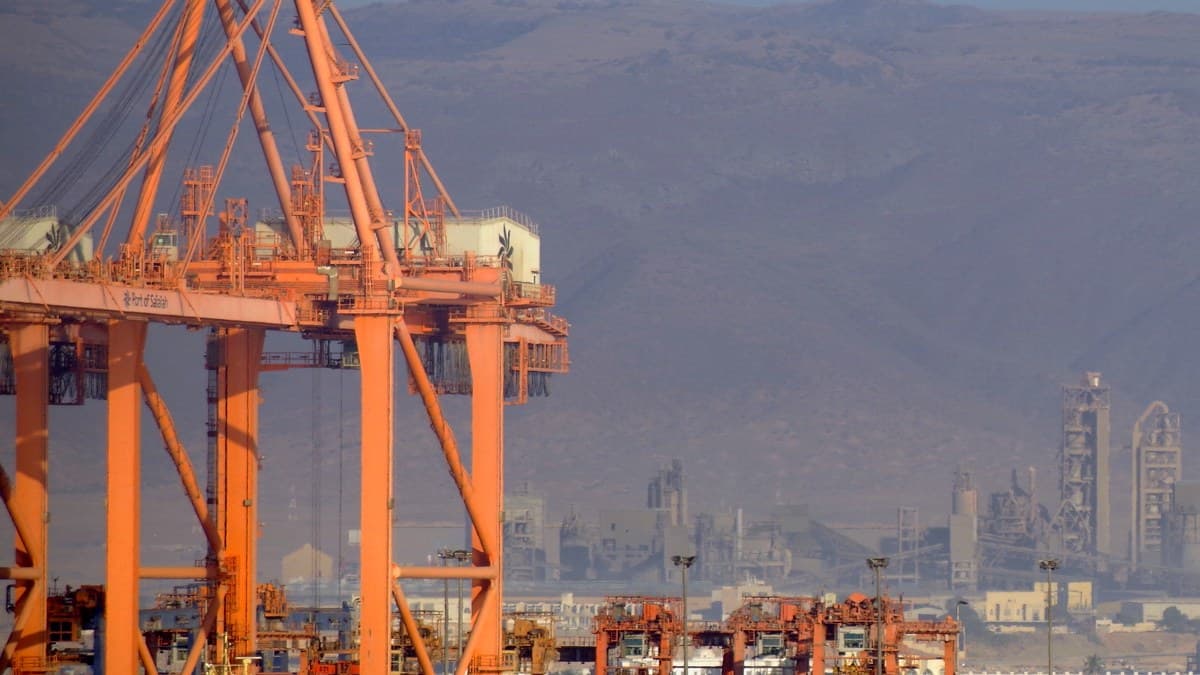
Cover photo: Port of Salalah, Balou46 / Wikimedia Commons, CC BY-SA 4.0 (cropped, color-adjusted).

By
Dexpell LogisticsInternational Logistics & Trade
Dexpell Logistics is an international freight forwarding company offering sea, air and road transport, project logistics and trade consulting across 90+ countries. The news, guides and analyses on this blog are produced by the Dexpell expert team.
Dexpell is here for your logistics needs
Sea, air, and road freight, project logistics, and trade consulting across 90+ countries.
