
Turkey to Djibouti FCL, LCL and air freight: Doraleh port, Ethiopia transit, customs documents, freight cost and transit-time factors. Get a quote.
Last Updated: October 29, 2026
How Does Shipping from Turkey to Djibouti Work?
Shipping from Turkey to Djibouti is mainly done by sea, from Mersin, Iskenderun, Ambarli or Gemlik via the Suez Canal and the Red Sea to the Port of Djibouti (Doraleh terminals). Full container (FCL), less-than-container (LCL), project/heavy cargo and air freight for urgent shipments are all available. Freight cost depends on container type, cargo weight and volume, commodity, Incoterm, transshipment port, Red Sea risk surcharges and any onward inland transport. Because Djibouti is also the main gateway for cargo bound for Ethiopia, if your final destination is Addis Ababa the route and documents should be planned for transit from the start.
To get current freight and transit-time options for your cargo, Get a Djibouti Freight Quote: https://www.dexpell.com/en/quote
What Shipping Options Are Available from Turkey to Djibouti?
FCL Container Shipping (20' / 40' / 40'HC)
Full containers are the most economical choice for bulky export cargo such as flour, cereal products, pasta, rebar, ceramics, furniture and machinery. The container is stuffed at your factory or warehouse in Turkey, moved to the port under an export declaration and discharged at the Doraleh Container Terminal (SGTD) in Djibouti.
LCL Groupage Shipping
Cargo that does not fill a container (spare parts, textile samples, small equipment) can be consolidated. LCL is usually charged per cubic meter or per ton, whichever is higher, and because direct consolidation to Djibouti is limited it often moves via a transshipment hub.
Project Cargo and Heavy / Out-of-Gauge Shipments
Construction machinery, steel structures and energy or infrastructure equipment can move on flat racks, open tops or as conventional breakbulk. The Doraleh Multipurpose Port (DMP) handles general cargo, bulk and project shipments.
Air Freight
Air freight suits urgent spare parts, samples, pharmaceuticals and high-value small shipments. The destination airport is Djibouti–Ambouli International Airport (JIB). Turkish Airlines operates passenger flights on the Istanbul–Djibouti route; belly capacity on the narrow-body aircraft used is limited, so larger air shipments are planned on connecting routings.
Transit to Ethiopia
Djibouti's most important role is as the main sea gateway for landlocked Ethiopia. Turkey-to-Addis Ababa cargo is discharged in Djibouti and moved inland under a transit regime by road or by the Addis Ababa–Djibouti railway. See our Turkey to Ethiopia shipping guide for that scenario.
How Much Does Shipping from Turkey to Djibouti Cost?
Freight rates change frequently with the carrier, season and Red Sea conditions, so a fixed price would be misleading. The main cost drivers are:
Container type and cargo dimensions: 20', 40' or 40'HC; per cbm/ton for LCL; for air freight, the higher of actual and volumetric weight.
Origin port and pre-carriage: trucking from your factory to Mersin, Iskenderun or Ambarli.
Commodity: dangerous goods (IMO), food, heavy or out-of-gauge equipment add procedures and charges.
Incoterm: EXW, FOB, CFR/CIF or DAP/DDP decides who pays which costs.
Red Sea surcharges: war-risk insurance, emergency and route-related surcharges can feed directly into the freight rate.
Destination charges: terminal handling (THC), duties and taxes, storage and, for Ethiopia transit, inland haulage.
How Long Does Shipping from Turkey to Djibouti Take?
Ocean transit time depends on the carrier's service, the transshipment port (for example a Red Sea or Mediterranean hub) and how the Suez–Red Sea route is operating at the time. Door-to-door time adds loading and export clearance in Turkey, vessel waiting time, discharge and clearance in Djibouti and, for Ethiopia transit, border and rail/road time. Airport-to-airport air freight is usually measured in days but varies with capacity and connections. We confirm an estimated arrival date (ETA) in writing for the selected service at booking.
How Is the Red Sea Situation Affecting Transit Times? (October 2026)
As of October 2026, container lines are gradually returning to the Suez–Red Sea route; Seatrade and BIMCO figures indicate that more than half of pre-crisis capacity is back on the route. However, Lloyd's List Intelligence reports that Bab el-Mandeb transits in September were still well below pre-crisis levels and regional tensions continue. Because Djibouti sits right at the Bab el-Mandeb Strait, these developments can affect sailing frequency and surcharges; we check the current situation with you at quotation stage. For regional alternatives, see our alternative shipping routes to the Gulf article.
Share your cargo dimensions and weight and we will compare freight and transit options by route: Calculate Your Djibouti Container Cost: https://www.dexpell.com/en/quote
Main Ports and Destinations in Djibouti
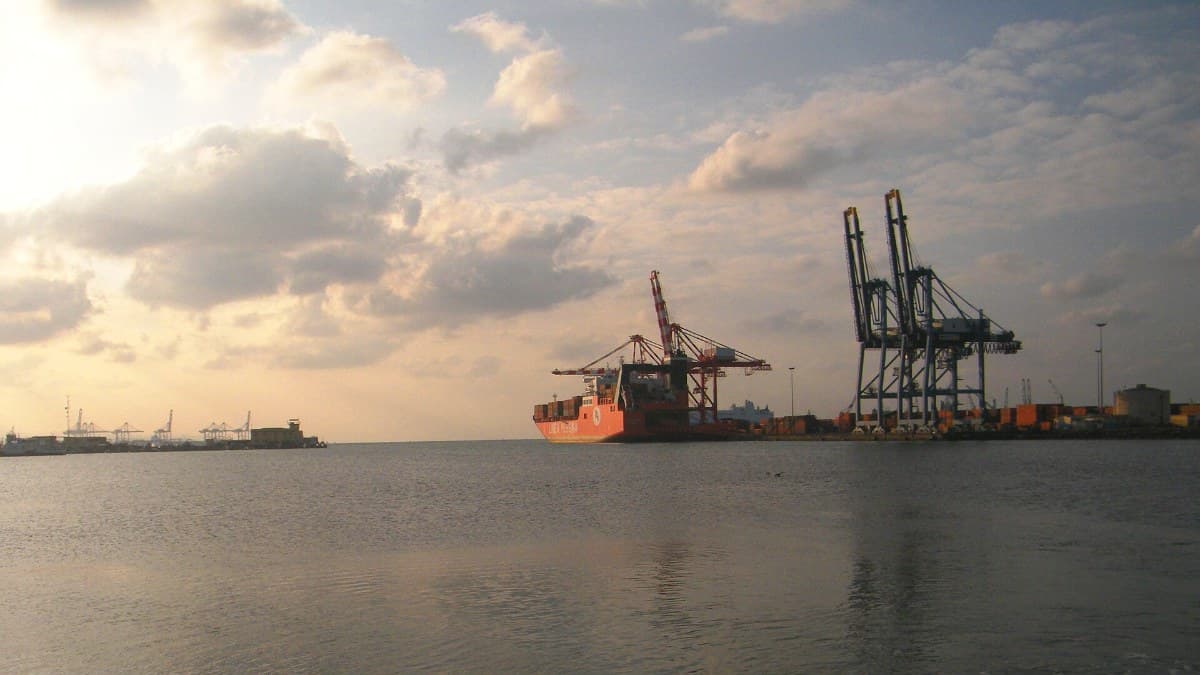
Doraleh Container Terminal (SGTD): the main container terminal. According to the terminal operator's 2026 presentation, roughly half of its throughput is transshipment, and its cranes can handle vessels of up to 23,000 TEU.
Doraleh Multipurpose Port (DMP): general cargo, bulk, ro-ro and project cargo.
Djibouti International Free Trade Zone: can be used for storage, re-export and regional distribution; we recommend confirming free-zone conditions before shipment.
Djibouti–Ambouli Airport (JIB): the air freight gateway.
Addis Ababa (Ethiopia): the most common final destination for cargo moving in transit via Djibouti.
What Products Are Exported from Turkey to Djibouti?
According to the Turkish Exporters Assembly's Cereals Sector Board, close to USD 300 million of cereal and cereal-product exports went to Djibouti in 2024 alone, reflecting its role as a logistics gateway for countries such as Ethiopia. Beyond flour, pasta, pulses and cereal products, other relevant cargo groups for Djibouti and its hinterland include:
Construction materials, rebar, ceramics and sanitary ware
Furniture and home textiles
Machinery, generators and spare parts
Food and packaged consumer goods
Equipment for infrastructure and energy projects (project cargo)
Shipping Flour and Food Products from Turkey to Djibouti
Food shipments typically need a health certificate and, where applicable, a phytosanitary certificate in addition to the certificate of origin. Agreeing packaging, labeling and shelf-life details with the buyer in advance reduces the risk of delays on arrival.
Required Documents and Customs for Djibouti Imports
According to logistics sources, imports into Djibouti generally require:
Commercial invoice (with currency, unit value, quantity and preferably the HS code)
Packing list
Certificate of origin
Bill of lading (B/L) or air waybill (AWB)
Export declaration (Turkish side)
Health/phytosanitary certificates for food and agricultural products
Electronic Cargo Tracking Note (ECTN) for ocean cargo: industry sources report it as mandatory; we confirm the current requirement before loading.
Djibouti assesses taxes on the CIF value (goods + freight + insurance). According to KPMG's fiscal guide, the domestic consumption tax (TIC) was set at 10% by the 2015 finance law, while customs duty rates vary by product. Since rates can change, we recommend confirming the exact tax calculation by HS code with a customs broker. Cargo moving in transit to Ethiopia is handled under a transit regime in Djibouti, and Ethiopian customs rules then apply.
What Does Dexpell Do for Djibouti Shipments?
Dexpell collects your cargo from your factory in Turkey, coordinates export customs, books FCL/LCL or air freight and plans discharge, clearance and delivery in Djibouti through our agent network. For Ethiopia transit cargo we organize inland transport from Djibouti to Addis Ababa; for project and heavy cargo we plan equipment and stowage; and we provide cargo insurance and shipment tracking. As an IATA cargo agent, we book and negotiate directly with airlines for air freight.
Request a Turkey–Djibouti Freight Quote
Get your current Turkey to Djibouti freight rate now. In the quote form, simply share: pickup city, destination (Djibouti or final address in Ethiopia), commodity and HS code, gross weight, dimensions/volume, container type (if applicable) and your preferred Incoterm.
Request a Turkey–Djibouti Shipping Quote: https://www.dexpell.com/en/quote
You can also send your freight request to info@dexpell.com.
Frequently Asked Questions
How much does a container from Turkey to Djibouti cost?
The price changes frequently with container type, origin port, carrier, season and Red Sea surcharges. Fill in the quote form with your cargo details for a current rate.
How long does sea freight from Turkey to Djibouti take?
It depends on the carrier's service, the transshipment port and the current state of the Suez–Red Sea route. We share the estimated arrival date for the selected service at booking.
Which port is used in Djibouti?
Containers arrive at the Doraleh Container Terminal (SGTD), while general cargo and project shipments use the Doraleh Multipurpose Port (DMP).
Can I ship to Ethiopia via Djibouti?
Yes. Most of Ethiopia's seaborne trade moves via Djibouti, and cargo can be carried to Addis Ababa under a transit regime by road or rail.
Can I send LCL cargo to Djibouti?
Yes, cargo that does not fill a container can be consolidated. LCL is charged per cbm or ton and usually moves via a transshipment hub.
Is air freight available from Turkey to Djibouti?
Yes. The destination is Djibouti–Ambouli Airport; because belly capacity on Istanbul–Djibouti passenger flights is limited, larger volumes are planned on connecting routings.
Which documents are needed for Djibouti imports?
Commercial invoice, packing list, certificate of origin and B/L or AWB are the core documents. An ECTN for ocean cargo and health certificates for food products may also be required.
Does Dexpell offer door-to-door delivery to Djibouti?
Yes, we coordinate the whole process from pickup in Turkey to the delivery address in Djibouti or Ethiopia through our agent network.
Related Services and Articles
Sea freight: https://www.dexpell.com/en/services/sea-freight
Air freight: https://www.dexpell.com/en/services/air-freight
Transit transport: https://www.dexpell.com/en/services/transit
Shipping from Turkey to Ethiopia: https://www.dexpell.com/en/media/blog/shipping-from-turkey-to-ethiopia
Shipping from Turkey to Kenya: https://www.dexpell.com/en/media/blog/shipping-from-turkey-to-kenya
Shipping from Turkey to Tanzania: https://www.dexpell.com/en/media/blog/shipping-from-turkey-to-tanzania
Shipping from Turkey to Egypt: https://www.dexpell.com/en/media/blog/shipping-from-turkey-to-egypt
Shipping from Turkey to Saudi Arabia: https://www.dexpell.com/en/media/blog/shipping-from-turkey-to-saudi-arabia
Photo: "The container terminal at the Port of Djibouti", Skilla1st, Wikimedia Commons, CC BY-SA 4.0 (cropped).

By
Dexpell LogisticsInternational Logistics & Trade
Dexpell Logistics is an international freight forwarding company offering sea, air and road transport, project logistics and trade consulting across 90+ countries. The news, guides and analyses on this blog are produced by the Dexpell expert team.
Dexpell is here for your logistics needs
Sea, air, and road freight, project logistics, and trade consulting across 90+ countries.
